
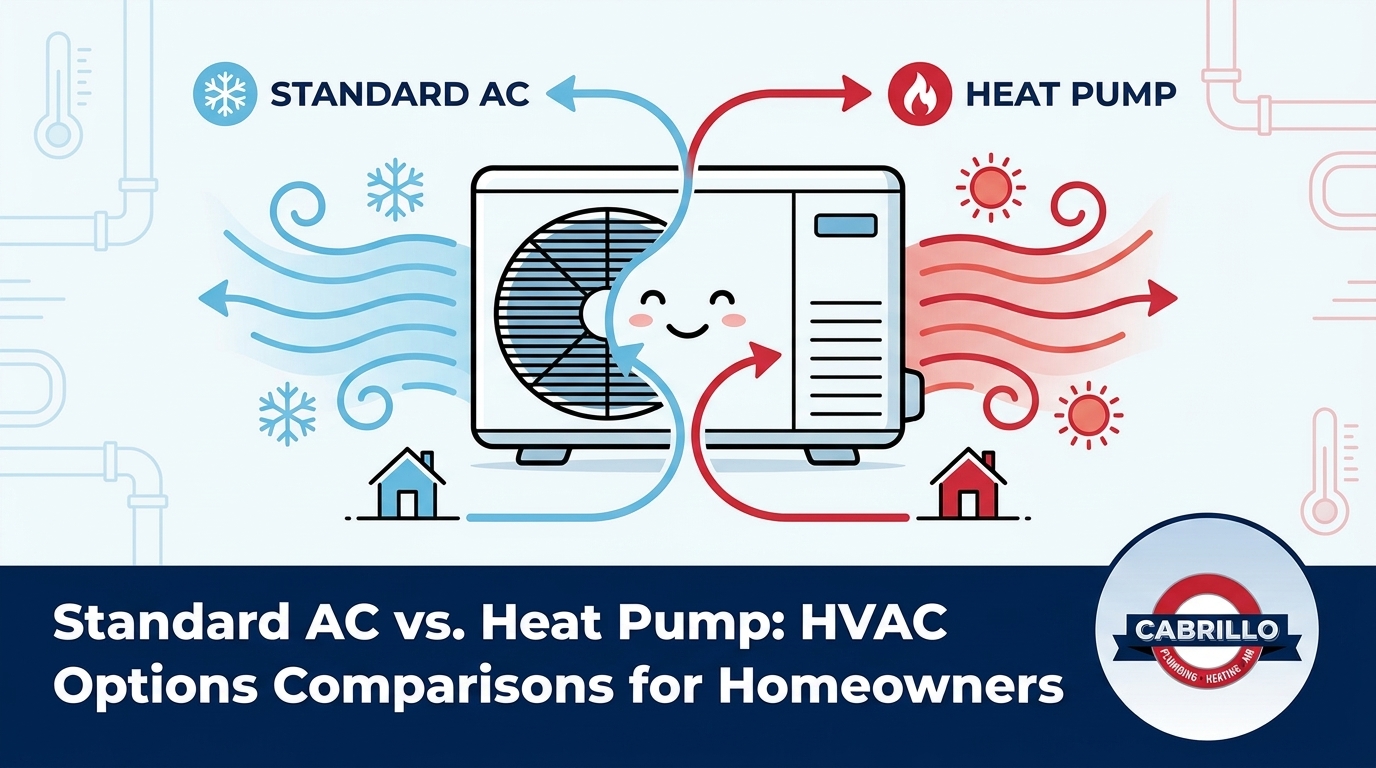
Is It Time to Rethink Your Home’s Climate Control System?
Are you trying to navigate the maze of options comparisons for homeowners as your aging HVAC system struggles to keep up with changing temperatures? Deciding how to replace an older unit is a significant milestone for any property. The choice between a standard split-system AC vs. a variable-speed heat pump often leaves people weighing upfront installation costs against long-term energy savings and year-round climate control benefits. You want a system that runs efficiently, keeps your utility bills manageable, and provides reliable comfort without constant breakdowns.
Whether your property requires major HVAC upgrades or essential plumbing services, proactive infrastructure planning is the key to maintaining a safe and comfortable home. Evaluating these systems requires an objective, technical breakdown rather than a high-pressure sales pitch. By understanding the mechanical differences and realistic performance expectations of both options, you can make a decision that protects your investment for the next decade or more.
Understanding the Core Mechanical Differences
To make an informed decision, you first need to understand how these two distinct systems actually operate. While both provide relief on a hot afternoon, the underlying mechanics differ significantly, impacting how they consume energy and condition your air.
The Mechanics of a Standard Split-System AC
A standard split-system air conditioner is a cooling-only appliance. It operates by absorbing heat from inside your home and releasing it outside through a refrigeration cycle. This system relies on two main components: an indoor evaporator coil and an outdoor condenser. Because it only handles cooling, a standard AC must be paired with a separate heating source—typically a gas furnace—to keep your home warm during the colder months. This dual-system setup has been the traditional standard for decades.
The Mechanics of a Heat Pump
A heat pump operates using the exact same refrigeration principles as an air conditioner, but with one critical addition: a reversing valve. This simple but highly effective mechanical component allows the system to reverse the flow of refrigerant. During the summer, it pulls heat out of your home. During the winter, the reversing valve switches direction, allowing the system to extract ambient heat from the outdoor air and move it inside. This means a heat pump provides both heating and cooling from a single piece of equipment.
The Variable-Speed Advantage
When comparing a standard split-system AC vs. a variable-speed heat pump, the compressor technology is a major differentiating factor. Traditional single-stage systems operate like a light switch—they are either running at 100% capacity or completely off. In contrast, variable-speed compressors act more like a dimmer switch. They can ramp up or down in tiny increments to match the exact heating or cooling demand of your home. This allows the system to run continuously at much lower capacities, which drastically reduces mechanical wear and tear, minimizes temperature swings, and lowers overall energy consumption.
Performance During the Peak Summer Cooling Season
The common problem: The name “heat pump” causes a lot of confusion. Many homeowners mistakenly believe that a heat pump is only designed for heating, or that it cannot cool a home as effectively as a traditional air conditioner.
The underlying cause: This misconception stems from older generations of heat pump technology, which struggled in extreme climates, and the somewhat misleading name of the equipment itself.
The modern solution: During the peak summer cooling season, a modern variable-speed heat pump operates identically to a high-efficiency air conditioner. It uses the exact same process of absorbing indoor heat and expelling it outdoors. In fact, because of the variable-speed technology, these systems often provide superior humidity control during warmer months. By running for longer cycles at a lower speed, the system has more time to pull moisture out of the air, leaving your home feeling cooler and more comfortable at a higher thermostat setting.
This consistent, low-speed operation also reduces the sudden jolts of start-and-stop strain on the mechanical components. Reducing system strain is a central focus when evaluating long-term maintenance plans. Equipment that avoids the harsh wear of constant cycling naturally requires fewer emergency repairs and boasts a longer functional lifespan.
Year-Round Climate Control and Winter Efficiency
While cooling performance is identical, the heating capabilities are where the mechanical differences truly stand out. Heat pumps do not generate heat by burning fuel; instead, they move existing heat from one place to another. Even when the outside air feels cold to the touch, there is still ambient thermal energy present. Modern heat pumps can extract this energy and compress it to warm your home efficiently.
The San Francisco Bay Area’s mild winters make high-efficiency heat pumps incredibly effective. Because the region rarely experiences extreme sub-zero temperatures, a heat pump operates in its optimal efficiency zone for the vast majority of the winter. It never has to work as hard as it would in a freezing northern climate.
Contrast this with the energy consumption of a traditional gas furnace paired with a standard AC. A gas furnace must consume fossil fuels to create heat, which inherently involves some energy loss through exhaust. Furthermore, California’s Title 24 energy standards and local electrification goals strongly favor high-efficiency electric heating. Upgrading to a heat pump aligns your home with these forward-looking efficiency standards, often qualifying you for state and local rebates designed to phase out older gas-burning appliances.
Navigating Energy Efficiency Ratings (SEER2 and HSPF2)
When comparing quotes, you will encounter a series of acronyms and numbers that dictate how efficiently a system uses electricity. The Department of Energy recently updated its testing procedures to better reflect real-world conditions, resulting in new rating metrics. Here is how to navigate them:
- Decoding SEER2 (Seasonal Energy Efficiency Ratio): This metric measures the cooling efficiency of both standard ACs and heat pumps over an entire cooling season. The rating is calculated by dividing the total cooling output by the total electrical energy input. A higher SEER2 rating indicates a more efficient system that will cost less to operate during the summer.
- Understanding HSPF2 (Heating Seasonal Performance Factor): This metric applies exclusively to heat pumps. It measures the total space heating required during the heating season divided by the total electrical energy consumed. Just like SEER2, a higher HSPF2 number means better winter energy efficiency and lower heating bills.
- Translating Ratings to Real-World Savings: Higher efficiency ratings directly translate to lower monthly utility costs. While a system with a higher SEER2 or HSPF2 rating will have a higher upfront installation cost, the month-over-month energy savings often offset that initial investment over the lifespan of the equipment.
- Reading Energy Labels: When reviewing equipment, look for the bright yellow EnergyGuide labels. These provide an estimated yearly operating cost based on national averages. While your exact costs will vary based on local utility rates and your specific usage habits, these labels offer a reliable baseline for side-by-side comparisons.
For more guidance on reading these labels and maximizing your home’s efficiency, exploring actionable homeowner tips can help you get the most out of whichever system you choose.
The Impact of the Coastal Environment on Equipment Longevity
Efficiency ratings only tell part of the story; where you live plays a massive role in how long your equipment will actually last. The Bay Area’s unique coastal environment introduces a specific challenge: salt air. Coastal salt air accelerates corrosion on the outdoor condenser units of both standard air conditioners and heat pumps.
Because Cabrillo was founded in 1961, our team has decades of experience observing how Bay Area heating and cooling needs—and coastal wear—have evolved. We have seen firsthand how quickly untreated aluminum fins and copper coils can degrade when exposed to the marine layer. The constant presence of saline moisture breaks down standard metals much faster than in dry, inland climates.
To combat this, outdoor HVAC components installed in coastal zones require specific protective coatings and durable cabinet materials. Whether you choose a standard split-system AC or a variable-speed heat pump, ensuring the outdoor unit features specialized anti-corrosion treatments is non-negotiable. Furthermore, longevity is heavily tied to proactive care and proper initial installation. Routine washing of the outdoor unit to remove salt deposits is a simple but highly effective way to extend the life of your investment.
Evaluating the Long-Term Investment: Repair vs. Replace
Eventually, every homeowner faces the decision of whether to keep repairing an aging unit or to replace it entirely. As systems age past the 10-to-15-year mark, their efficiency drops, and the frequency of mechanical failures increases.
One local homeowner reached out during the fall when their 25-year-old heater required a significant repair. A technician arrived on time, professionally assessed the problem, and fixed the aging unit, but situations like this often prompt a larger conversation about long-term value. When you are pouring money into a decades-old system, you are paying for repairs on equipment that is already costing you a premium in monthly energy waste.
To weigh the cost of cumulative repairs against the savings of a new system, look at the frequency of your service calls. If your system requires multiple repairs a year, or if a single repair approaches half the cost of a new, high-efficiency unit, replacement is usually the mathematically sound choice. This logic applies across all home infrastructure. For example, understanding the 5,000 rule for plumbing agreements helps homeowners evaluate major plumbing investments by multiplying the age of the equipment by the cost of the repair. You can apply a very similar framework to your HVAC system to determine when it is time to stop patching and start upgrading.
Side-by-Side Comparison: Standard AC vs. Heat Pump
To summarize the mechanical differences and help you visualize the best fit for your property, here is an objective comparison of a standard split-system AC vs. a variable-speed heat pump.
| Feature | Standard Split-System AC | Variable-Speed Heat Pump |
|---|---|---|
| Cooling Capability | Excellent; relies on indoor evaporator and outdoor condenser. | Identical to standard AC; variable-speed offers better humidity control. |
| Heating Capability | None; requires a separate gas furnace or heating system. | Excellent; reversing valve extracts outdoor heat to warm the home. |
| Energy Efficiency Metrics | Measured by SEER2 (cooling only). | Measured by SEER2 (cooling) and HSPF2 (heating). |
| Environmental Impact | Relies on fossil fuels for winter heating (via paired furnace). | Fully electric; aligns with local electrification and zero-emission goals. |
| Ideal Use Case | Homes with a relatively new, highly efficient gas furnace already in place. | Homes looking to upgrade both heating and cooling simultaneously, or moving away from gas. |

Frequently Asked Questions About HVAC Equipment Upgrades
What is the mechanical difference between a standard AC and a heat pump?
The primary mechanical difference is the presence of a reversing valve in a heat pump. Standard ACs only cool the air and require a separate furnace to provide heat during the winter. Heat pumps use the reversing valve to switch the flow of refrigerant, allowing them to provide both heating and cooling from a single, fully electric unit.
Are variable-speed heat pumps worth it in the Bay Area?
Yes, variable-speed heat pumps are highly effective and efficient in the Bay Area. The region’s mild winters and coastal climate mean the system rarely has to operate in extreme, sub-zero temperatures, keeping it in its peak efficiency zone. Additionally, they align perfectly with local electrification goals and Title 24 energy standards, often qualifying homeowners for beneficial rebates.
Is a heat pump better than a central air conditioner?
It depends entirely on your home’s existing infrastructure and your long-term goals. Heat pumps offer the distinct advantage of dual functionality and often higher overall efficiency since they replace both the AC and the furnace. However, if you recently installed a brand-new, high-efficiency gas furnace, pairing it with a standard central air conditioner might make more immediate financial sense.
Can I replace my AC with a heat pump?
Yes, in most cases an aging AC can be directly replaced with a heat pump. Because they use the same basic ductwork to distribute air, the transition is usually straightforward. However, a professional must evaluate your existing ductwork compatibility and ensure your home’s electrical panel has the capacity to support the heat pump’s electrical draw.
How does coastal salt air affect outdoor HVAC units?
Coastal salt air accelerates corrosion on the metallic components of outdoor HVAC units, particularly the condenser coils and fins. The saline moisture breaks down standard materials much faster than dry air. To protect your investment, it is critical to choose equipment with durable materials and factory-applied protective coatings, and to maintain a regular cleaning schedule to wash away salt buildup.
Making a Mechanically Sound Choice for Your Home
Ultimately, the goal is to make a mathematically and mechanically sound choice based on unbiased, side-by-side data. Whether you lean toward the traditional reliability of a standard split-system AC paired with a furnace, or the modern, year-round efficiency of a variable-speed heat pump, evaluating realistic performance expectations is the key to long-term satisfaction.
Every property is unique, from its ductwork layout to its exposure to coastal air. To ensure you select the right equipment, speak with an objective local expert who can assess your specific home infrastructure without pushing a specific agenda. By focusing on a clear, unbiased side-by-side comparison of the two systems, including realistic performance expectations and operational differences, you can confidently invest in a climate control solution that will serve your home efficiently for years to come.