Central Air vs Mini Split for San Francisco Bay Area Homes: Which Is Right for You?
Central air vs mini split for the San Francisco Bay Area homes is one of the most common HVAC questions local homeowners face — and the answer depends on your home’s age, ductwork, and neighborhood microclimate.
Here’s a quick comparison to help you decide:
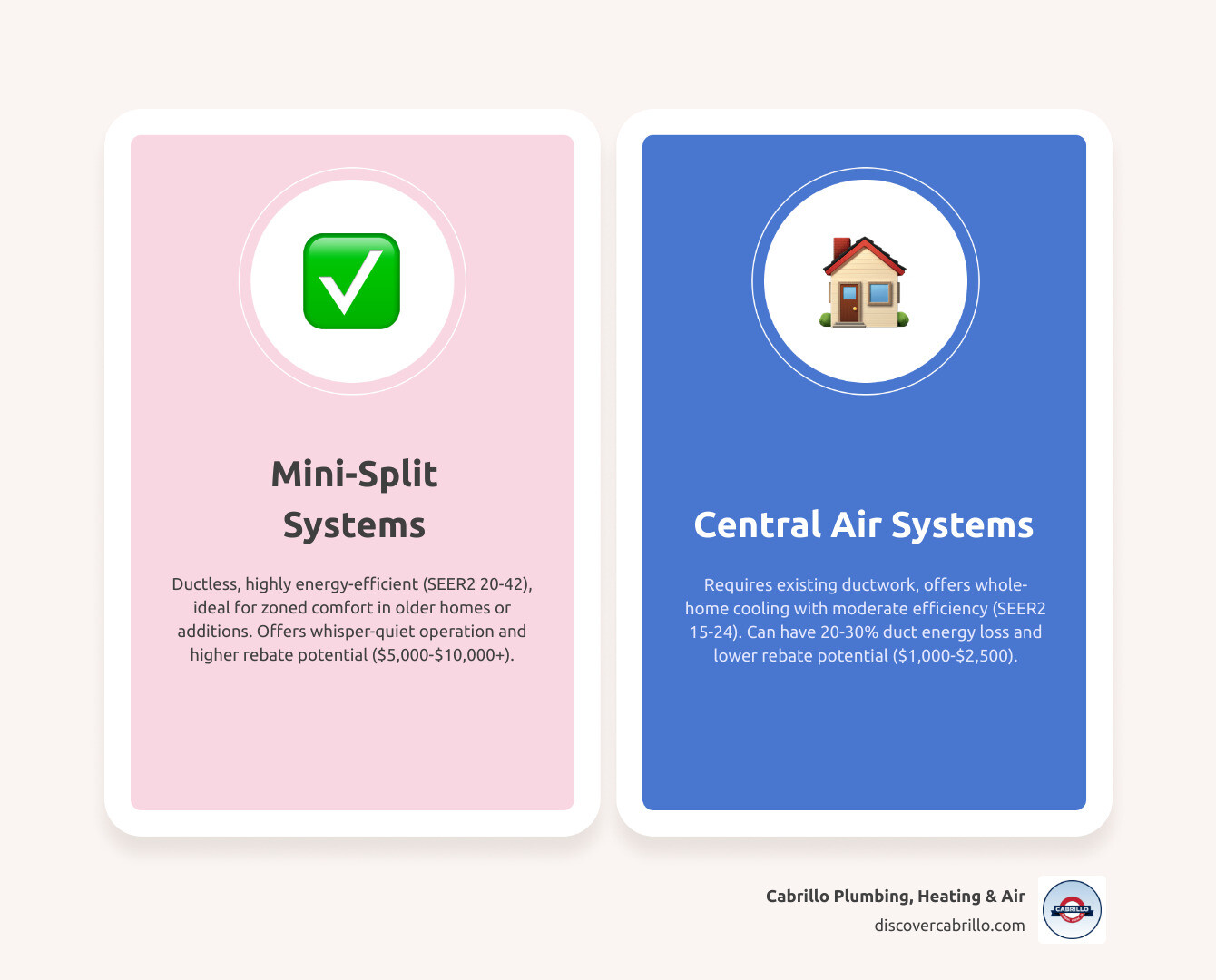
| Factor | Mini-Split | Central Air |
|---|---|---|
| Existing ductwork needed | No | Yes (ideal) |
| Energy efficiency (SEER2) | 20-42 | 15-24 |
| Duct energy loss | None | 20-30% |
| Best for older homes (Victorians, bungalows) | Yes | Rarely |
| Zone control | Built-in | Add-on cost |
| Whole-home coverage | Multi-zone | Yes |
| Rebate potential | Higher ($5,000-$10,000+) | Lower ($1,000-$2,500) |
| Lifespan | 20-25 years | 15-20 years |
| Indoor noise level | 19-32 dB (whisper-quiet) | 40-50 dB |
The Bay Area’s unique combination of coastal fog, inland heat waves, wildfire smoke, and distinct microclimates makes this decision more nuanced than in most other cities. A home in the Oakland Hills has very different needs than one in Walnut Creek or Daly City. Add in PG&E’s electricity rates and California’s generous rebate programs, and the right system choice can make a meaningful difference in your comfort and long-term costs.
This guide breaks down both systems clearly so you can make a confident, informed decision for your home.
Understanding central air vs mini split for the San Francisco Bay Area homes
When we talk about central air vs mini split for the San Francisco Bay Area homes, we are essentially comparing two ways to move heat. Both systems use heat pump technology, which is incredibly efficient because it moves heat from one place to another rather than creating it. In the summer, it pulls heat out of your house; in the winter, it pulls heat from the outside air to bring it indoors.
The primary difference lies in how that conditioned air reaches your rooms. A Central AC Installation San Francisco CA utilizes a large, hidden indoor air handler that pushes air through a network of ducts. Conversely, Ductless Mini-Split AC systems use small, individual indoor units connected to an outdoor condenser by thin refrigerant lines.
Both systems now feature advanced inverter compressors. Unlike older “on-off” systems that blast air at 100% capacity and then shut down, modern variable-speed technology allows the system to modulate its output. This is perfect for the Bay Area’s mild climate, where you might only need a 10% “sip” of cooling to stay comfortable on a breezy afternoon in San Mateo.
How Central Systems Work in Ducted Homes
Central systems are the traditional choice for homes built between the 1980s and early 2000s in areas like Concord or Walnut Creek. These homes usually already have Ductwork installed for a furnace.
In a central setup, a single large blower motor (the air handler) pushes cooled or heated air through supply vents located in every room. Return vents then pull air back into the system to be re-filtered and re-conditioned. It provides a “set it and forget it” experience where the entire home stays at a uniform temperature.
The Mechanics of Ductless Mini-Split Systems
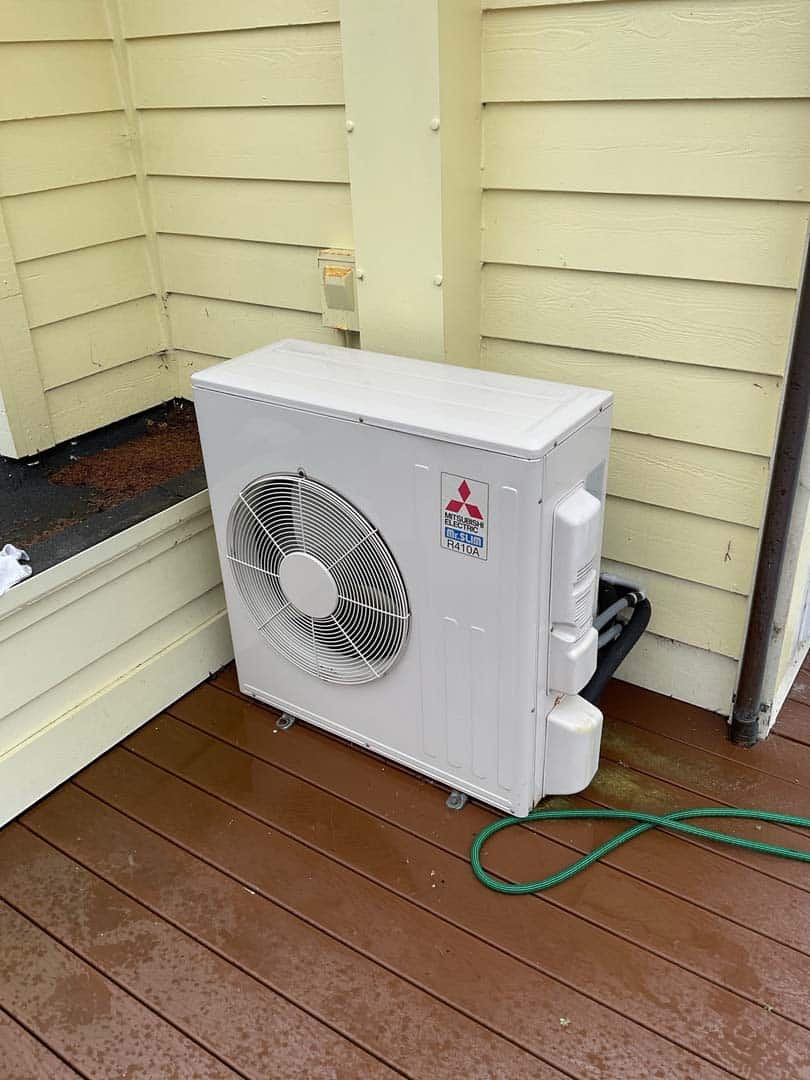
Mini Splits bypass the need for ducts entirely. Each room (or “zone”) gets its own sleek indoor air handler. These units are connected to the outdoor unit via a small three-inch hole in the wall that houses refrigerant lines, a power cable, and a condensate drain.
This design allows for incredible flexibility. If you’re working in your home office in Palo Alto all day, you can cool just that room while leaving the rest of the house off, significantly reducing your energy consumption.
Efficiency and Performance in the Bay Area Climate
Efficiency is a major concern for us in April 2026, especially with PG&E rates often ranging between $0.40 and $0.55 per kWh. When comparing central air vs mini split for the San Francisco Bay Area homes, mini-splits generally take the lead in raw efficiency.
| Metric | Central Heat Pump | Ductless Mini-Split |
|---|---|---|
| SEER2 Rating | 15 – 24 | 20 – 42 |
| Duct Energy Loss | 20% – 30% | 0% |
| Efficiency (COP) | ~3.0 (300%) | Up to 4.0+ (400%+) |
Mini-splits can reach SEER2 ratings as high as 42, while even the most premium central systems usually max out around 24. A major reason for this gap is “duct loss.” Even with Ductwork Repair Sealing San Francisco CA, central systems typically lose 20% to 30% of their energy to leaks or heat transfer as air travels through unconditioned attics or crawlspaces. Mini-splits deliver 100% of their conditioned air directly into the room.
Maximizing Efficiency with central air vs mini split for the San Francisco Bay Area homes
The secret to lowering your PG&E bill is zone control. With a Ductless Mini-Split Installation San Jose CA, you aren’t paying to cool an empty guest room or a formal dining room you only use on holidays. By conditioning only occupied spaces, many of our clients see operating costs that are 25% to 40% lower than traditional central air.
Handling Fog, Heat Waves, and Wildfire Smoke
Bay Area weather is unpredictable. One morning you’re dealing with “June Gloom” fog in Pacifica, and by afternoon, a microclimate shift brings a 90-degree heat wave.
- Wildfire Smoke: Both systems can help, but central systems often have an edge here because they can be fitted with thick, high-MERV filters that scrub the air for the entire home. However, premium mini-splits now offer multi-stage filtration (like plasma quad filters) that are excellent at removing particulates in specific rooms.
- Fog and Humidity: On those damp San Francisco mornings, Duct Cleaning San Francisco CA is vital for central systems to prevent mold growth in ducts. Mini-splits are excellent at “dry mode” operation, removing moisture without over-cooling the room.
- Heat Waves: Inverter technology ensures that when a heat wave hits San Jose, your system won’t trip the breaker by drawing too much power at once. It ramps up smoothly to meet the demand.
Choosing the Right System for Your Property Type
Your home’s architecture is often the deciding factor. The Bay Area is famous for its diverse housing stock, from 19th-century Victorians to mid-century modern Eichlers.
When to Prioritize central air vs mini split for the San Francisco Bay Area homes
If you live in a newer ranch-style home in Walnut Creek or a 1990s build in San Ramon, you likely already have a furnace and functional ducts. In these cases, a Heat Pump Replacement San Francisco CA is often the most straightforward choice.
Central air is also the winner for homeowners who prioritize a minimalist aesthetic. If you don’t want to see any equipment on your walls, central air stays hidden behind small, discreet vents. It’s also the better choice for large families where every room is occupied simultaneously, as it provides consistent whole-home comfort.
Conversely, a Ductless Mini-Split Installation Oakland CA is the “gold standard” for:
- Historic Homes: Victorians in San Francisco or Berkeley often lack the wall or ceiling space for bulky ducts. Mini-splits preserve the architectural integrity of the home.
- Eichler Homes: With their flat roofs and radiant floor heating, Eichlers have nowhere to hide ductwork.
- ADUs and Additions: If you’re building a backyard cottage or converting a garage, a single-zone mini-split is far easier than trying to extend existing ductwork.
For those who need a full system overhaul, AC Installation Replacement San Francisco CA allows us to evaluate if your current ducts are worth keeping or if switching to ductless is more cost-effective.
The Benefits of a Hybrid HVAC Approach
You don’t always have to pick just one. Many Bay Area homeowners are opting for a hybrid approach. For example, you might use a central heat pump for the main living areas but perform a Heat Pump Installation San Jose CA for a stubborn upstairs master suite that always stays five degrees warmer than the rest of the house. This “best of both worlds” strategy ensures the whole family is comfortable without overworking the main unit.
Incentives and Long-Term Value for California Homeowners
In 2026, the financial incentives for switching to heat pump technology have never been stronger. Because California is pushing for carbon neutrality by 2045, there are massive rebates available that can significantly offset the initial investment.
- Federal Tax Credits: Under the Inflation Reduction Act, homeowners can claim a 30% tax credit (up to $2,000) for qualifying heat pump installations.
- HEEHRA Rebates: For income-qualified households, these can provide between $2,000 and $8,000 in point-of-sale discounts.
- Local Incentives: Programs like TECH Clean California and PG&E specific rebates often favor ductless systems, sometimes offering twice as much back compared to central AC.
Beyond the immediate savings, these systems increase property resale value. Modern buyers in the Bay Area look for New Air Conditioning Systems that signal energy efficiency and climate readiness. Regular Heat Pump Maintenance Oakland CA ensures that your system remains a high-value asset for 20 to 25 years.
Frequently Asked Questions about Bay Area HVAC
We know that choosing an HVAC system is a big decision. Here are the answers to the questions we hear most often from our neighbors in San Francisco, San Mateo, and beyond.
Which system is quieter for dense urban neighborhoods?
If you live in a tightly packed neighborhood in South San Francisco or a row house in the city, noise matters. Mini-splits are remarkably quiet. The indoor units operate at 19-32 decibels — that’s literally quieter than a whisper. Central air indoor blowers are louder, typically ranging from 40-50 decibels.
For the outdoor units, modern inverter technology means neither system will keep your neighbors awake. We always prioritize strategic outdoor condenser placement to ensure maximum peace and quiet. If your current system is making strange noises, you may need a Ductless Mini-Split Repair San Francisco CA to restore that silent operation.
How does the coastal salt air affect outdoor units?
In coastal areas like Pacifica, Daly City, and Half Moon Bay, salt air is a real threat. It can corrode standard aluminum fins in just a few years. We recommend units with specialized “Blue Fin” or “Gold Fin” corrosion-resistant coatings. Even with these coatings, annual Heat Pump Repair Service San Francisco CA and maintenance are essential to rinse away salt deposits and protect your investment.
Can I use these systems for both heating and cooling?
Yes! That is the beauty of a heat pump. By using a reversing valve, these systems provide 100% of your cooling in the summer and 100% of your heating in the winter. They are much more efficient than old gas furnaces. In fact, a heat pump with a COP of 3.0 is 300% efficient, whereas even a high-end gas furnace is only 96% efficient.
Whether you choose a Heat Pump Installation San Francisco CA or a ducted system, you are moving toward a more sustainable, all-electric home. To keep these systems running perfectly year-round, don’t forget to schedule your Ductless Mini-Split Maintenance San Francisco CA.
Conclusion
Choosing between central air vs mini split for the San Francisco Bay Area homes doesn’t have to be overwhelming. If your home has great ducts and you want a hidden system, central air is a fantastic choice. If you live in a historic home, want the lowest possible PG&E bills, or need to fix a “hot room,” a ductless mini-split is likely your winner.
At Cabrillo Plumbing, Heating & Air, we’ve been helping our neighbors stay comfortable since 1961. We know the microclimates of the Bay Area because we live here, too. Our technicians are experts in both ducted and ductless technology, and we stand behind our work with the Cabrillo Guarantee — we charge by the job, not the hour, so you always know exactly what to expect.
Ready to find the perfect fit for your home? Schedule a consultation for air conditioning services today, and let’s get your home ready for whatever the Bay Area weather throws our way!