
Why Is My AC Running But Not Cooling? Triage Your HVAC System
Is your AC actually broken—or just struggling to keep up with the heat? At Cabrillo Plumbing, Heating & Air Company, one of the most common homeowner questions answered by our team during a sudden heatwave is why a residential HVAC system runs continuously but only blows room-temperature air from the vents. It is incredibly frustrating to hear the familiar hum of your cooling system, check your thermostat, and realize the indoor temperature is actually climbing. Before you panic about a total system failure, it helps to understand how your air conditioner actually removes heat from your home.
The ultimate diagnostic metric for your cooling health is the supply and return air temperature delta. In our decades of serving the local area, we’ve found that this measurement tells you exactly how much heat your system is successfully extracting from the indoor air. While homeowners can perform basic, safe triage steps to try and restore this critical metric, knowing exactly where to draw the line between a quick DIY fix and calling a professional is critical for both safety and the lifespan of your equipment.
For urgent diagnostics and comprehensive plumbing services, trusted local experts are standing by. Securing your home’s long-term reliability is best achieved through proactive maintenance plans.
Understanding the Supply and Return Air Temperature Delta
To figure out why your system is blowing warm air, you first need to understand the technical baseline for a healthy air conditioner. The core metric professionals use is the supply and return air temperature delta. This is simply the difference in temperature between the warm, unconditioned air entering your system through the return vent and the cooled air exiting through your supply vents.
A normal supply and return air temperature delta is typically between 14 to 20 degrees Fahrenheit. If your home is 80 degrees, the air coming out of the vents should read between 60 and 66 degrees. When this number shrinks, it is the definitive first sign of a failing cooling cycle, moving the issue from a subjective feeling of discomfort to objective, actionable data.
How to Safely Measure Your Temperature Delta
Homeowners can safely measure this difference using a standard digital probe thermometer. Here is how to gather the data:
- Step 1: Turn your air conditioner on and let it run for at least 15 minutes to stabilize the cycle.
- Step 2: Insert the thermometer into the main return vent (where the large air filter usually sits) and record the temperature.
- Step 3: Move to the closest supply vent (the register blowing air into the room), insert the thermometer, and wait for the reading to stabilize.
- Step 4: Subtract the supply temperature from the return temperature.
| Temperature Delta Reading | System Status | Recommended Action |
|---|---|---|
| 14°F to 20°F | Optimal Operation | Normal. If the house is warm, the system may be undersized or insulation is poor. |
| 10°F to 13°F | Struggling / Inefficient | Check for airflow restrictions like a dirty filter or blocked vents. |
| Below 10°F | Failing Cooling Cycle | Requires immediate triage and likely professional diagnostics. |
If your calculation falls below the optimal range, you have a confirmed issue. The next step is to perform safe, basic troubleshooting before making a service call.
Step 1: The Thermostat and Air Filter Triage Checklist
Before assuming the worst, you must rule out the most basic operational errors. Many service calls for a poor supply and return air temperature delta are resolved with simple homeowner adjustments. Follow this strict triage checklist to verify your system’s baseline settings.
- Verify the thermostat mode: Ensure the system is actually set to “cool” and that the temperature setpoint is at least three degrees below the current room temperature. A bumped setting can easily switch a system to “fan only” or “heat.”
- Check the fan setting: The fan switch should be set to “auto” rather than “on.” When set to “on,” the blower motor runs continuously, even when the outdoor compressor cycles off. This means the system will blow unconditioned, room-temperature air between cooling cycles, making it feel like the AC is failing.
- Inspect the air filter: The air filter plays a critical role in maintaining proper system airflow. Locate your filter and hold it up to a light source. If you cannot see light passing through the media, it is severely clogged.
- Replace if necessary: A severely clogged filter restricts airflow over the indoor coil, artificially skewing the supply and return air temperature delta and forcing the system to blow warmer air. Swap it out for a clean, standard pleated filter.
The boundary of safe DIY: Checking your thermostat settings and swapping a dirty air filter is completely safe and expected homeowner maintenance. However, opening the physical air handler cabinet, handling electrical components, or attempting to clean internal coils crosses the line. Those tasks require professional training to avoid electric shock or equipment damage.

Step 2: Identifying Frozen Evaporator Coils
If you have verified your thermostat settings and installed a clean air filter, but the system is still blowing warm air, you must check for a frozen evaporator coil. The physical consequences of severe airflow restrictions can completely halt the cooling process.
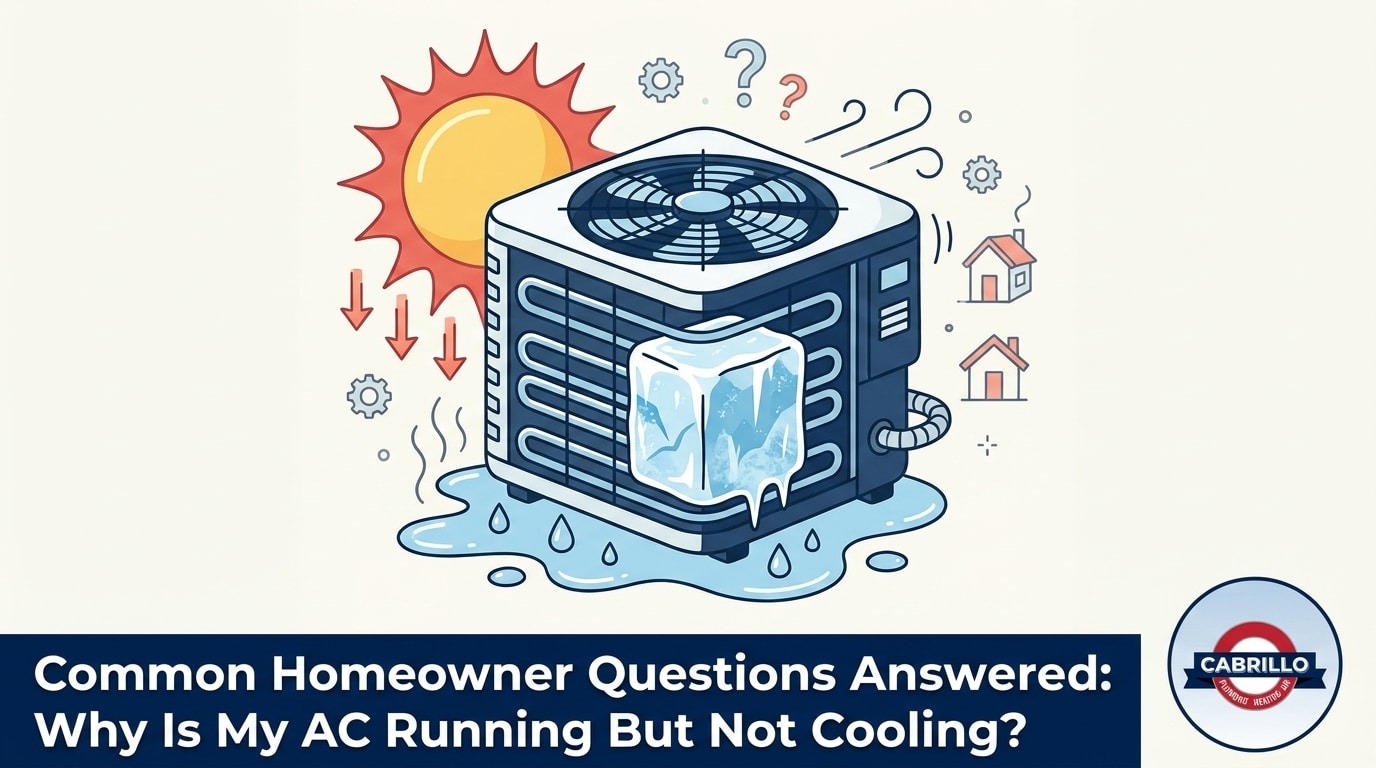
Your air conditioner does not “make” cold air; it absorbs heat from your home using cold refrigerant inside the evaporator coil. When airflow is restricted—whether by a forgotten air filter, closed supply vents, or blocked return grilles—there is not enough warm air passing over that coil to keep the refrigerant above freezing. The temperature of the coil rapidly drops, causing the natural humidity in the air to freeze directly onto the metal fins.
Once a layer of ice forms, it creates an insulating barrier. This frozen block completely stops heat transfer, effectively destroying the normal supply and return air temperature delta. The blower motor will continue pushing air, but because the air cannot interact with the cold coil, it comes out of your vents at room temperature.
The quick fix: If you suspect ice buildup—often accompanied by water pooling around the indoor unit or visible frost on the copper refrigerant lines outside—turn off the cooling cycle immediately. Continuing to run a frozen system forces the outdoor compressor to work against extreme pressure, which can cause catastrophic, permanent damage. Leave the thermostat fan setting on “auto” while the cooling is turned off to help safely and slowly thaw the unit before a professional arrives.
When Low Refrigerant is the Culprit (And EPA Regulations)
If your air filter is spotless, the coils are completely thawed, and the supply and return air temperature delta remains unacceptably poor, a refrigerant issue is highly likely. This is where the line between safe DIY triage and legally mandated professional work becomes absolute.
An air conditioner operates as a closed-loop system. It does not “consume” or burn refrigerant like a car consumes gasoline. Therefore, if your system is low on refrigerant, there is a physical leak in the copper lines, the coils, or the fittings. The myth of simply “topping off” the refrigerant every summer is a dangerous and costly misconception. Adding refrigerant without locating and brazing the physical leak means the chemical will simply leak out again, continually destroying your system’s efficiency.
Strict EPA Guidelines
Handling HVAC refrigerants is strictly regulated. Under EPA Section 608 of the Clean Air Act, it is illegal for unlicensed individuals to handle, vent, or purchase these chemicals. Refrigerants operate under extremely high pressure and can cause severe frostbite, respiratory damage, or environmental harm if mishandled.
Attempting DIY refrigerant work is not only illegal but extremely dangerous. A licensed technician must use specialized gauges to measure the subcooling and superheat metrics, locate the micro-leak with electronic sniffers or UV dye, securely braze the copper, pull a deep vacuum on the system to remove moisture, and then weigh in the exact factory charge of new refrigerant. Only this precise process will permanently restore your supply and return air temperature delta.
Evaluating Repair vs. Replacement for Older Bay Area HVAC Systems
Diagnosing a failing cooling system requires understanding the local environment. Our team at Cabrillo knows firsthand that older Bay Area homes frequently feature retrofitted HVAC systems and poor thermal envelopes. With distinct microclimates causing rapid temperature shifts, a home with poor insulation will heat up incredibly fast when an HVAC system runs continuously without actually cooling the air.
If a professional determines that your unfixable supply and return air temperature delta is caused by a failing compressor rather than a simple leak, you face a major decision. The compressor is the heart of the outdoor unit, and replacing it is often the most expensive repair in the HVAC industry. For systems over 15 years old, homeowners must carefully weigh their options.
When evaluating repair vs. replacement costs, it is vital to factor in the efficiency gains of modern equipment. A new system will use significantly less electricity to achieve the proper supply and return air temperature delta, often offsetting the installation cost over time through lower utility bills. Prompt, professional assessment prevents days of discomfort during unexpected heatwaves. In one recent case involving a complex, aging system failure that stumped previous contractors, our Cabrillo technicians identified the exact required part immediately, facilitating a complete repair within a week once the component arrived. Having a professional who understands older regional housing stock ensures you get an accurate diagnosis the first time.
How Preventative Care Protects Your Whole Home
A failing HVAC supply and return air temperature delta often signals a broader lack of overall home system maintenance. Home systems do not operate in isolation; the habits that protect your air conditioner also protect your plumbing and electrical infrastructure.
Routine checkups catch airflow and mechanical issues early, preventing emergency breakdowns. A technician performing annual maintenance will measure the electrical draw of the blower motor, clear the condensate drain line to prevent water damage, and clean the outdoor condenser coils to ensure maximum heat rejection. These small, proactive steps keep the system running efficiently and dramatically extend its operational lifespan.
This proactive approach applies universally. Compare proactive HVAC care to routine water heater maintenance. Flushing sediment from a water tank prevents major leaks and pressure failures, just as swapping an air filter prevents a frozen evaporator coil. Addressing small inefficiencies prevents major water or air disruptions. For example, during a routine system replacement—such as a recent water heater installation where our team replaced a unit that had lasted since 2012—our Cabrillo technicians thoroughly explain all efficiency options before completing the work, leaving the job site immaculate and the homeowner confident in the system’s future reliability. Holistic system care is always the most cost-effective strategy for homeownership.
Common Homeowner Questions Answered: HVAC Troubleshooting FAQ
When cooling fails, homeowners need fast, objective answers. Here are direct responses to the most frequent troubleshooting inquiries, grounded in the core diagnostic metric of the supply and return air temperature delta.
Why is my AC running but not cooling?
This is usually caused by restricted airflow, frozen coils, or low refrigerant levels. When the system runs continuously but fails to lower the room temperature, it means the equipment is no longer successfully transferring heat from the inside to the outside. Always check the air filter first to see if replacing it restores the proper supply and return air temperature delta.
How do you fix an AC that is blowing warm air?
Start with your basic thermostat settings and a visual filter inspection. Ensure the fan is set to “auto” and the filter is clean enough for light to pass through. If these basic DIY steps are completed but the supply and return air temperature delta remains poor, a licensed professional must inspect the refrigerant levels and mechanical components.
Can a dirty filter cause my AC to blow warm air?
Yes, severe airflow restriction causes the indoor evaporator coil to drop below freezing. When ice forms on the coil, it acts as an insulator that blocks heat transfer entirely. This effectively destroys the supply and return air temperature delta, resulting in room-temperature air blowing from the vents.
How can I tell if my AC compressor is broken or if it just needs a filter?
A clean filter that fails to improve the supply and return air temperature delta after the system has been thawed indicates a deeper mechanical or refrigerant issue. While a homeowner can rule out airflow blockages, only a licensed technician using specialized gauges can definitively diagnose a failed compressor or a refrigerant leak.
What is a normal temperature difference between return and supply air?
The standard supply and return air temperature delta is between 14 to 20 degrees Fahrenheit. This means the air blowing out of your supply vents should be 14 to 20 degrees cooler than the air being pulled into the return vent. Readings outside this range require immediate attention to prevent system damage.
Restore Your Home’s Comfort with Expert Diagnostics
Understanding exactly how your cooling system works helps eliminate the panic of a sudden breakdown. A clear checklist helps determine exactly what you can safely check yourself—like thermostat settings and air filters—before paying for a service call. However, if DIY triage fails to restore your supply and return air temperature delta, professional help is legally and technically mandatory.
Don’t let a struggling air conditioner leave you sweating through the summer. Rely on Cabrillo’s deep local expertise, serving the community since 1961, to accurately diagnose complex refrigeration issues. Backed by the comprehensive Cabrillo Guarantee, you can secure your comfort and long-term system health by enrolling in a preventative maintenance plan today.