
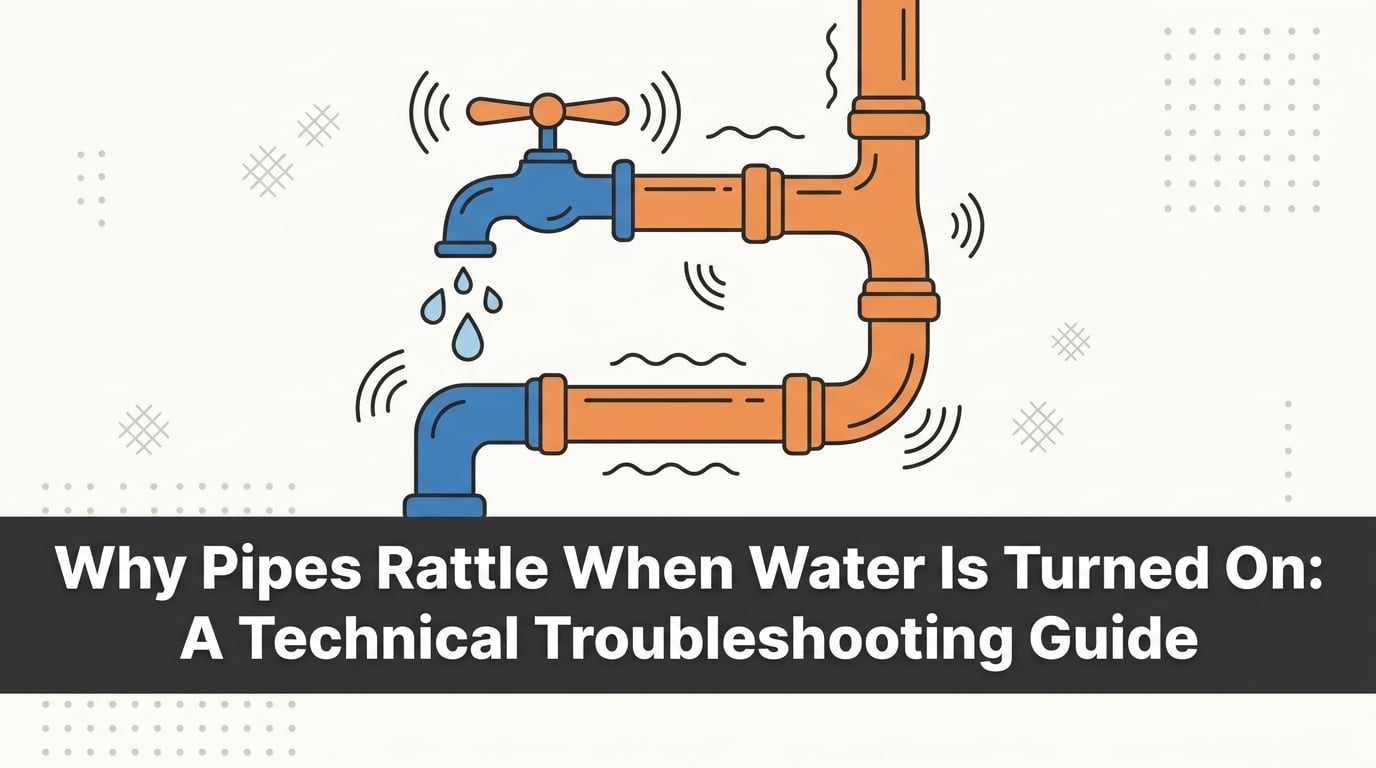
The Sudden Shock: Identifying the Source of Rattling Plumbing
When you turn on a faucet and immediately hear a loud banging echoing through the walls, your search for home maintenance tips and troubleshooting begins instantly. That sudden, jarring noise is more than just a nuisance; it is a clear mechanical warning sign. Plumbing systems are engineered to transport heavy volumes of water silently and efficiently. When pipes begin to rattle, vibrate, or hammer, it indicates that the system is experiencing underlying operational strain that should not be ignored.
Many homeowners assume that noisy plumbing is just a quirk of an aging house. However, a review of general educational service queries reveals that rattling pipes consistently point to specific, diagnosable physical failures within the water delivery infrastructure. The noise you hear is the sound of kinetic energy improperly transferring into the physical structure of your home.
This technical breakdown bypasses basic plumbing definitions to focus directly on the mechanics of system failure. By understanding the physics behind the noise, you can make informed decisions about whether you are dealing with a simple fixture issue or a systemic pressure problem. The goal is to safely identify the root cause of the rattling so you can determine the correct next steps for your property.
Understanding Hydraulic Shock and Water Hammer Mechanics
The most common cause of a violent banging noise in your plumbing is a phenomenon known as hydraulic shock, commonly referred to as water hammer. To understand this, you have to look at the physics of moving water. Water is heavy, weighing roughly 8.34 pounds per gallon. When water flows through your pipes, it carries significant kinetic energy. If that flow is forced to stop or change direction suddenly, the energy has nowhere to go. It creates a massive pressure spike that reverberates backward through the plumbing system.
This shockwave travels at the speed of sound through the water, violently shaking the pipes until the energy dissipates. Over time, repeated hydraulic shock does serious damage. It weakens pipe joints, degrades rubber seals in valves, and can even cause fittings to fracture and leak. To combat this, modern plumbing systems use water hammer arrestors. These devices feature a sealed chamber of air and a small piston. When the pressure spike hits, the piston compresses the air, absorbing the shockwave before it can rattle the pipes. If your home lacks these arrestors, or if old air chambers have become waterlogged, hydraulic shock will echo freely through your walls.
The Physics of Sudden Valve Closures
Not all valves create hydraulic shock. The issue almost always traces back to fast-acting valves. When a valve snaps shut instantly, the water column slams into a solid barrier. If a valve closes slowly, the water gradually decelerates, preventing the pressure spike.
| Valve Type | Closing Speed | Risk of Hydraulic Shock | Common Locations |
|---|---|---|---|
| Solenoid Valve | Instantaneous (under 0.1 seconds) | Very High | Washing machines, dishwashers, ice makers |
| Quarter-Turn Ball Valve | Fast (0.5 to 1 second) | Moderate | Modern shut-off valves, some faucets |
| Multi-Turn Gate Valve | Slow (multiple seconds) | Low | Main water shut-offs, outdoor hose bibbs |
The acoustic signature: You can often diagnose the issue simply by listening. A water hammer produces a sharp, distinct “bang” immediately after a valve closes, followed by a fading vibration. If the noise is a continuous, rapid-fire rattling while the water is running, you are likely dealing with a different mechanical issue entirely.
The Role of High Water Pressure in Plumbing Strain
Another primary culprit behind noisy pipes is excessive municipal or well water pressure. According to Uniform Plumbing Code (UPC) and EPA WaterSense standards, standard residential water pressure should typically sit between 40 and 60 psi (pounds per square inch). When system pressure exceeds 80 psi, it significantly increases the likelihood of pipes rattling when water is turned on.
High water pressure forces water through narrow valve openings at extreme velocities. This high-speed flow creates turbulence, which causes the pipes to vibrate violently against their internal wall mounts. Chronic high pressure stresses your entire infrastructure. It pushes against the delicate rubber diaphragms inside your appliances, wears out faucet cartridges prematurely, and turns minor hydraulic shocks into system-damaging events.
To regulate this force, homes connected to municipal water supplies utilize a Pressure Reducing Valve (PRV). The PRV is a bell-shaped brass device installed on the main water line before it branches out to the rest of the house. It uses a heavy spring and a rubber diaphragm to choke down high street pressure to a safe, usable level for the home. When a PRV fails, full street pressure floods the house, and the pipes immediately begin to rattle under the strain.
Measuring System Pressure
Checking your home’s water pressure is a straightforward, safe diagnostic step that does not require taking anything apart.
- Use a standard gauge: You can purchase a simple water pressure gauge with a threaded connection at any hardware store.
- Attach to a cold water source: Thread the gauge onto an outdoor hose bibb or the drain connection on your water heater (ensure no water is running elsewhere in the house).
- Open the valve fully: Read the dial. If it registers above 80 psi, your system is operating under dangerous strain.
- Monitor for off-peak spikes: Municipal water pressure often fluctuates. Leave the gauge attached with the secondary needle engaged overnight to see if pressure spikes while the neighborhood is asleep and usage drops.

How Environmental Factors and Loose Strapping Destabilize Pipes
Even if your water pressure is perfect and you have arrestors installed, pipes will still rattle if they are not physically secured. Plumbing lines are routed through wall cavities, floors, and ceiling joists. To keep them stable, they are anchored to the wooden framing using specialized straps, clamps, and brackets. Over decades of use, these physical mounting points degrade.
Thermal expansion plays a massive role in this degradation. As hot water flows through a copper pipe, the metal expands slightly. When the pipe cools, it contracts. This constant micro-movement slowly works the fasteners loose from the wooden studs. Once a strap gives way, the pipe has room to move. The natural turbulence of flowing water causes the unanchored pipe to strike the surrounding drywall or wooden framing, amplifying the sound into a loud rattle.
Furthermore, regional environmental factors dramatically accelerate this process. With our company operating since 1961, experts here have observed exactly how older Bay Area plumbing architectures age and degrade differently compared to modern builds. The San Francisco Bay Area experiences constant seismic micro-movements. Combined with coastal soil liquefaction and seasonal ground shifting, homes here settle and shift at an accelerated rate. This continuous structural movement torques the internal framing, snapping rigid pipe straps and pulling anchors out of the wood faster than in more geologically stable regions.
Aging Infrastructure vs. Modern Builds
The age of your property dictates how susceptible it is to strapping failure. Homes built over 40 years ago generally utilized rigid metal strapping—often galvanized steel or rigid copper brackets. This metal-on-metal contact provides zero acoustic dampening. When these rigid straps loosen, the resulting rattle is loud and abrasive.
Modern builds utilize acoustic isolation clamps. These feature heavy plastic or rubber inserts that hold the pipe securely while absorbing vibrations and allowing for silent thermal expansion. Upgrading old, loose metal straps to modern isolation clamps is one of the most effective ways to silence a noisy wall cavity.
Worn Valves and Appliance Connections
Sometimes, the rattling noise is not a system-wide problem at all, but rather a localized failure at a specific fixture. If you only hear the noise when you turn on the guest bathroom sink, or only when the washing machine fills, the issue is isolated to that specific branch of the plumbing tree.
The most frequent localized culprit is a worn isolation valve. The small shut-off valves under your sinks and behind your toilets contain rubber washers and brass stems. Over time, the rubber degrades and the stems loosen. When you turn the water on, the water flows past this loose internal component, causing it to flutter rapidly inside the brass housing. This high-speed fluttering creates a “machine gun” rattling sound that travels up the pipe. Replacing the cartridge or the entire shut-off valve usually resolves the noise instantly.
Appliances with built-in solenoid valves are also frequent offenders. If your ice maker line rattles, or if you are researching why your dishwasher not draining is accompanied by a loud buzzing or vibrating water line, the appliance’s internal fill valve is likely failing. As the solenoid struggles to stay fully open or fully closed, it creates rapid micro-shocks in the water line. Diagnosing these localized issues requires careful listening to pinpoint exactly which fixture triggers the noise.
Safe Diagnostics: When to Inspect and When to Call a Professional
Identifying and addressing routine operational failures in standard residential systems before they escalate is the hallmark of responsible property management. However, there is a strict dividing line between safe homeowner observation and complex, regulated repairs.
Here is a systematic approach to safely diagnosing rattling pipes:
- Isolate the trigger: Walk through the house and test every faucet, shower, and appliance one by one. Document exactly which fixtures cause the noise and whether the sound occurs while the water is running or right after it shuts off.
- Check the system pressure: Attach a gauge to your exterior hose bibb as outlined earlier. If the pressure reads above 80 psi, you have identified a primary stressor.
- Inspect exposed lines: Go to your basement, crawlspace, or utility room and physically inspect exposed water lines. Look for missing straps, broken plastic hangers, or pipes resting directly against ductwork.
- Test the water meter: Ensure all water is off inside the house, then check your primary water meter. If the low-flow indicator is spinning, you have an active leak, which can sometimes cause pressure imbalances that lead to rattling.
The Limits of DIY Troubleshooting
While observation is safe, technical plumbing modifications must adhere to local building codes. You should immediately stop troubleshooting and call a licensed professional if you encounter any of the following warning signs:
- Opening walls: If the loose strap is located behind finished drywall, do not attempt to open the wall yourself. A professional can use acoustic listening devices to pinpoint the exact location, minimizing drywall damage.
- Adjusting or replacing a PRV: Pressure reducing valves are heavily tensioned mechanical devices. Adjusting them improperly can flood your home with extreme pressure, blowing out appliance seals instantly.
- Soldering arrestors: Installing water hammer arrestors requires cutting into the existing copper or PEX lines and installing new tee fittings. Soldering pipes near wooden studs is a major fire hazard for amateurs.
- Visible leaks: If the rattling pipe has stressed a joint to the point of leaking, the structural integrity of that plumbing branch is compromised and requires professional repiping.
Frequently Asked Questions About Noisy Plumbing
How do I stop my pipes from rattling?
Stopping the rattle requires identifying the root cause first. If the issue is high pressure, a professional will need to install or replace a pressure reducing valve (PRV). If the noise occurs when a valve closes quickly, installing water hammer arrestors will absorb the shock. For pipes that vibrate while water is running, securing the lines with modern acoustic isolation clamps is the standard fix.
Is it dangerous if my pipes rattle?
Yes, ignoring rattling pipes can lead to significant property damage. The physical vibration stresses soldered copper joints, threaded connections, and appliance hoses. Over time, this mechanical fatigue will cause the joints to fail, resulting in sudden, catastrophic water leaks inside your wall cavities or flooring.
Why do my pipes make a banging noise when I turn the water on?
A banging noise right when you turn the water on usually indicates high system pressure or a loose internal component inside the valve itself. The sudden rush of high-pressure water forces its way past degraded rubber washers, causing them to flutter rapidly, or it violently throws an unanchored pipe against a wooden stud.
What does a water hammer sound like?
A water hammer sounds like a distinct, heavy thud or a sharp “bang” that occurs specifically after a faucet or appliance valve shuts off. It is often followed by a brief, fading shudder that travels through the wall. It sounds very different from the continuous, rapid-fire chattering of a loose valve stem.
Can high water pressure cause pipes to burst?
Absolutely. Standard residential plumbing is designed to operate safely between 40 and 60 psi. When municipal pressure surges past 80 or 100 psi, it places immense strain on flexible supply lines, rubber appliance hoses, and aging pipe joints, greatly increasing the risk of a sudden rupture.
Protecting Your Home’s Plumbing Infrastructure
Rattling pipes are never just a random noise; they are a mechanical symptom of physical stress. Whether your system is suffering from the intense kinetic shock of water hammer, the chronic strain of unregulated high municipal pressure, or the slow environmental degradation of its physical anchors, the infrastructure is communicating a failure. Ignoring these acoustic warnings allows minor joint fatigue to compound into major water damage over time.
The most effective strategy is to document exactly when and where the noises occur, test your baseline water pressure, and use those observations to inform your next steps. Identifying and addressing routine operational failures in standard residential systems before they escalate is the smartest way to protect your property. If your pipes are banging, rattling, or vibrating, consult with a local licensed expert to secure your system and restore quiet, reliable operation.