
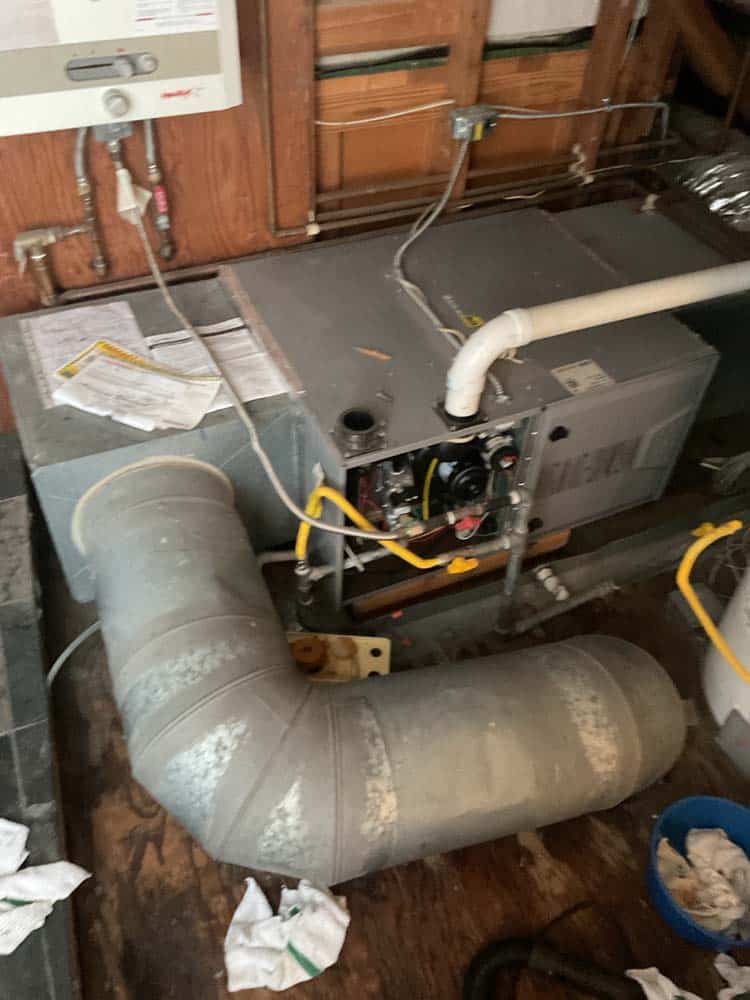
Why Knowing What an HVAC Maintenance Plan Includes Could Save You Thousands
What does an HVAC maintenance plan include is one of the most important questions a Bay Area homeowner can ask before signing a service agreement — and the answer covers a lot more than most people expect. A typical plan includes:
- Two seasonal tune-up visits per year (spring for cooling, fall for heating)
- Multi-point inspection of electrical connections, coils, and safety controls
- Cleaning of condenser and evaporator coils, condensate drains, and blower components
- Refrigerant level verification
- Thermostat calibration and safety testing
- Filter inspection and replacement assistance
- Written service report after each visit
- Priority scheduling and repair discounts for plan members
Heating and cooling account for over 52% of a home’s energy use. Without regular care, your system can quietly lose about 5% of its operating efficiency every single year — and that adds up fast on your utility bill.
For Bay Area homeowners dealing with wildfire smoke, foggy coastal air, and swings between cold winters and warm summers, a well-maintained HVAC system isn’t a luxury — it’s what keeps your home safe and comfortable year-round. Whether your home has an older furnace in San Francisco or a newer heat pump in Menlo Park, understanding exactly what a maintenance plan covers helps you make a smarter decision about protecting that investment.
Easy what does an hvac maintenance plan include word list:
What Does an HVAC Maintenance Plan Include?

When you enroll in a professional service agreement, you are shifting from a reactive “fix-it-when-it-breaks” mindset to a proactive preventative care strategy. Instead of waiting for your system to fail on a hot July afternoon or a chilly January morning, routine tune-ups catch minor issues before they cascade into major emergencies.
A comprehensive maintenance plan is designed around seasonal tune-ups, multi-point inspections, deep system cleanings, and rigorous safety checks. According to industry data, up to 95% of major HVAC breakdowns can be prevented through these regular check-ups. Our technicians perform up to 30 separate procedures during a standard visit to ensure every part of your system is operating at peak performance. For a complete look at what you can do to keep your system running smoothly between professional visits, read The Ultimate Homeowner Guide to HVAC Maintenance.
What Does an HVAC Maintenance Plan Include for Cooling Systems?
When preparing your air conditioner or heat pump for the warm summer months, the cooling portion of your maintenance plan focuses on heat transfer and moisture management. A dirty system has to work twice as hard to cool your home, which spikes your energy bills and places unnecessary strain on vital components.
During a cooling tune-up, a technician will focus on several critical tasks:
- Coil Cleaning: Outdoor condenser coils and indoor evaporator coils accumulate dirt, dust, and outdoor debris. Cleaning these coils restores proper heat transfer and can reduce energy consumption by up to 15%.
- Refrigerant Level Verification: Technicians measure sub-cooling and super-heat temperatures to ensure your system has the exact refrigerant charge specified by the manufacturer.
- Condensate Drain Flushing: Air conditioners pull humidity out of your indoor air. If the condensate drain line gets clogged with algae or dust, it can cause water to back up, leading to system shutdowns or expensive water damage to your home.
- Blower Component Calibration: Checking and cleaning the blower motor and fan assembly ensures unrestricted airflow throughout your ductwork.
- Electrical Connection Tightening: Technicians measure voltage and amperage draw while tightening loose electrical connections that often vibrate loose over a busy cooling season.
To learn more about how preventive cooling care acts like a protective shield for your air conditioner, check out Why Your AC Needs a Best Friend and Other Benefits of Service Agreements.
What Does an HVAC Maintenance Plan Include for Heating Systems?
While cooling tune-ups focus on efficiency and heat transfer, heating tune-ups prioritize safety and combustion integrity. Whether you run a natural gas furnace or an electric heat pump, winter heating systems require specialized safety verifications to protect your household.
During a heating maintenance visit, the technician performs several highly technical procedures:
- Heat Exchanger Inspection: This is the most critical safety check. Technicians inspect the heat exchanger for microscopic cracks, rust spots, or physical damage. A cracked heat exchanger can leak deadly carbon monoxide gas directly into your home’s breathing air.
- Carbon Monoxide Testing: We run specialized diagnostics to ensure there is no carbon monoxide escaping into your living spaces.
- Burner and Ignition Cleaning: Cleaning the burner assembly ensures clean combustion, while testing the ignition system prevents delayed ignition issues.
- Gas Pressure and Flue Draft Testing: Measuring gas pressure and ensuring the flue system is venting exhaust gases safely out of your home.
- Safety Control Testing: We verify that all limit switches and safety shutoffs are fully operational, ensuring the system will automatically turn off if it ever overheats.
Regularly scheduled heating inspections are vital to keep your home warm and secure. Discover why this seasonal care is so essential by reading Regular Heating and Cooling Maintenance Is an Evolutionary Requirement.
The Core Benefits of Enrolling in a Service Agreement
Investing in a regular maintenance plan delivers immediate financial and practical returns. Since heating and cooling make up more than half of your home’s total energy footprint, keeping your system optimized directly lowers your monthly utility bills. In fact, a poorly maintained HVAC system can increase your energy usage by up to 15% to 25%, while leaky ducts can lose 20% to 30% of conditioned air before it ever reaches your living spaces.
Beyond energy savings, plan members enjoy several exclusive perks:
- Priority Scheduling: When seasonal demand peaks, plan members jump to the front of the line for service calls.
- Repair Discounts: Members typically receive discounts (such as our 10% repair discount) on any parts or labor required outside of normal maintenance.
- Peace of Mind: Knowing your system has been professionally vetted for safety and performance.
To explore these advantages in greater detail, you can read about the Top 4 Benefits of HVAC Preventive Maintenance and see What Are the Benefits of Enrolling in HVAC Maintenance Agreements.
Extending Equipment Lifespan and Preventing Breakdowns
An HVAC system is a significant capital investment for any homeowner. Well-maintained heating and cooling systems routinely last 15 to 20 years, whereas neglected systems often fail and require replacement after just 10 to 12 years.
By catching tiny issues early—such as a failing capacitor or a slightly worn belt—preventative care reduces overall wear and tear on your compressor and blower motor. This component protection ensures your system ages gracefully rather than suffering a catastrophic, premature failure. For more insights on maximizing your system’s years of service, read Maintenance Can Extend the Life of Your Equipment.
Maintaining Manufacturer Warranty Compliance
Many homeowners do not realize that almost all major HVAC manufacturers require documented proof of annual professional maintenance to honor their parts warranties. If a major component like your compressor fails, the manufacturer may deny your warranty claim if you cannot produce written service records showing the system was maintained every year. Enrolling in a maintenance plan automates this process, keeping your warranty compliant and valid.
Comparing Maintenance Plans, Manufacturer Warranties, and Home Warranties
It is common to confuse maintenance plans with warranties, but they serve completely different purposes. A maintenance plan is proactive, while warranties are reactive.
| Feature | HVAC Maintenance Plan | Manufacturer Warranty | Home Warranty |
|---|---|---|---|
| Primary Focus | Proactive prevention, cleaning, and optimization | Coverage for factory-defective parts | Coverage for unexpected appliance failures |
| Preventative Care Included? | Yes (Coil cleaning, safety checks, tune-ups) | No | No |
| Labor Coverage | Included for maintenance; discounted for repairs | Typically excluded after the first year | Included (subject to service call fees) |
| Service Fees | None for scheduled maintenance visits | Varies by contractor | Requires a trade service call fee per claim |
| Warranty Protection | Keeps your manufacturer warranty valid | Relies on proof of professional maintenance | Often requires proof of maintenance to honor claims |
Relying on warranties alone without a maintenance plan is a risky strategy that often leads to denied claims and unexpected out-of-pocket costs. To dive deeper into this comparison, read Annual HVAC Maintenance – Is It Worth It.
Professional Tune-Ups vs. DIY Homeowner Tasks
While professional maintenance is essential, there are several simple tasks homeowners can perform to support their system’s efficiency:
- Filter Replacement: Change your standard air filters every 30 to 90 days (or monthly if you have pets). Clean filters keep airflow strong and protect your indoor air quality.
- Outdoor Unit Clearance: Trim shrubs, plants, and weeds to maintain at least a two-foot clearance around your outdoor condenser unit. Remove any leaves or twigs that accumulate on top of the unit.
- Keep Vents Clear: Ensure that return air vents and supply registers are not blocked by furniture, rugs, or drapes.
However, complex diagnostics and physical system cleanings must be left to licensed professionals. Handling refrigerants legally requires EPA Section 608 certification, and testing high-voltage electrical components carries severe safety hazards. Professional technicians use specialized tools to measure static pressure, analyze combustion gases, and inspect heat exchangers for microscopic cracks that are invisible to the naked eye.
Frequently Asked Questions About HVAC Maintenance Plans
How often should professional HVAC maintenance be performed?
Professional maintenance should be performed twice per year. We recommend scheduling a cooling tune-up in the spring (March to May) and a heating tune-up in the fall (September to November). If you have a heat pump, biannual visits are especially important because the system works year-round to both heat and cool your home.
How long does a typical maintenance visit take?
A thorough, professional maintenance visit typically takes between 60 and 90 minutes. During this time, the technician executes up to 30 distinct procedures, ranging from cleaning the condensate lines to testing electrical safety controls, providing you with a complete health report of your system.
Do maintenance plans vary by region or system type?
Yes, maintenance plans are tailored to regional climate demands and specific equipment configurations. In the San Francisco Bay Area, our mild coastal climate means systems face high humidity, salt air, and seasonal fog, which can accelerate rust and corrosion. Furthermore, homes with modern heat pumps require different electrical and refrigerant checks compared to traditional gas furnaces.
Conclusion
A comprehensive HVAC maintenance plan is the single best way to protect your home comfort, reduce your energy bills, and avoid the stress of unexpected system breakdowns. By partnering with Cabrillo Plumbing, Heating & Air, you gain access to skilled, licensed technicians who understand the unique climate demands of the San Francisco Bay Area.
Ready to enjoy year-round peace of mind and extend the life of your heating and cooling systems? Learn more about how we can serve your home by exploring the Cabrillo Service Agreement today.