
The Real Ductless vs Ducted Cooling Pros and Cons Bay Area Homeowners Need to Know
Understanding the ductless vs ducted cooling pros and cons is the fastest way to figure out which system fits your Bay Area home — here’s a quick side-by-side breakdown:
| Factor | Ducted (Central AC) | Ductless (Mini-Split) |
|---|---|---|
| Energy Efficiency | SEER2 13–26; loses 25–30% via duct leaks | SEER2 18–38+; near-zero energy loss |
| Installation | Lower cost with existing ducts; invasive without | Minimal disruption; small wall opening only |
| Zoning | Single thermostat; add-on zoning is costly | Built-in room-by-room control |
| Aesthetics | Hidden in walls and ceilings | Visible wall-mounted units |
| Maintenance | Filter change every 1–3 months; duct cleaning | Filter rinse every 2–4 weeks; annual service |
| Best For | Homes with good existing ductwork | Older homes, additions, no ductwork |
| Lifespan | ~15 years | 20–30 years |
Bay Area homes are anything but one-size-fits-all. From century-old Victorian flats in San Francisco to newer builds in San Mateo, the right cooling system depends heavily on what’s already inside your walls — and on the Bay Area’s famously unpredictable microclimates. A neighborhood in the Sunset District might rarely see temperatures above 65°F, while a home just a few miles inland in Walnut Creek can bake in triple-digit summer heat. That gap makes the choice between ducted and ductless cooling more meaningful here than almost anywhere else in California.
In 2026, updated SEER2 efficiency standards and new rebate programs have also shifted the math on which system delivers the best long-term value. Whether you’re dealing with an aging central air unit, finishing a basement, or adding a room where no ductwork reaches, the decision deserves a clear-eyed look at both options.
Understanding the Core Differences in Ductless vs Ducted Cooling Pros and Cons

The main difference is simple: ducted systems move cooled air through a network of ducts, while ductless systems deliver cooled air directly into individual rooms.
A ducted system is what most homeowners picture as central AC. One indoor air handler or evaporator coil works with an outdoor unit, and cool air travels through ductwork to vents around the home.
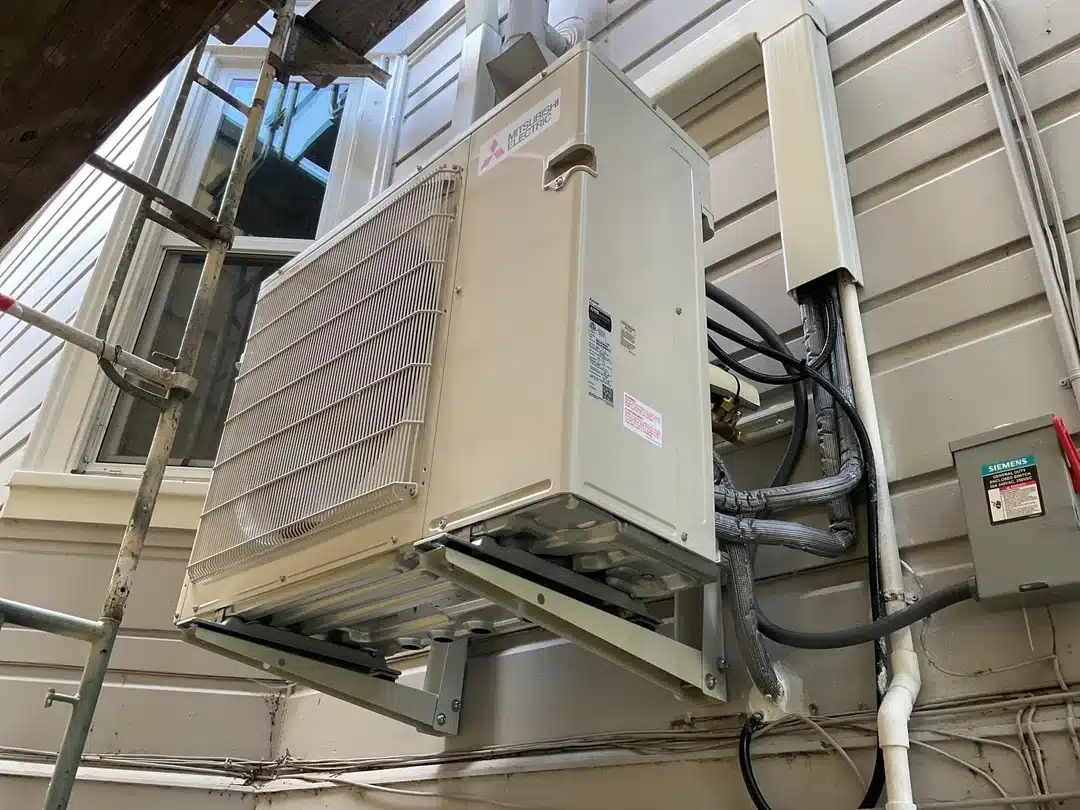
A ductless system, usually called a mini-split, skips the ducts entirely. It uses one outdoor unit connected by a small conduit to one or more indoor units mounted on a wall, ceiling, or sometimes low on a wall. Each indoor unit cools a specific zone.
That difference affects almost everything else: efficiency, installation complexity, zoning, maintenance, and even how your walls look.
How Ducted Systems Distribute Air
Ducted cooling uses forced-air technology. Air is cooled at the central unit, pushed through supply ducts, and delivered to rooms through registers. Return ducts then bring air back to be cooled again.
The biggest ducted-system advantages are:
- Even, whole-home cooling
- Hidden equipment and clean aesthetics
- Familiar operation with one main thermostat
- Strong fit for homes that already have solid ducts
If your house already has well-designed ducts, a ducted upgrade can be a very practical solution. Many newer Bay Area homes were built with this setup in mind, and nationally, 91% of homes built since 2000 include central ducts.
The downside is the duct system itself. Leaks, poor insulation, bad joints, and attic heat can reduce real-world efficiency. Research consistently shows duct systems can lose about 25% to 30% of cooling energy this way. If ducts are old or damaged, sealing or replacing them matters. That is why services like Ductwork Installation San Francisco CA and duct repairs can have a big impact on comfort.
The Mechanics of Ductless vs Ducted Cooling Pros and Cons
Ductless systems cool rooms directly. Each indoor head has its own fan and coil, and the refrigerant lines run through a small wall opening to the outdoor unit.
The big technical advantage here is variable-speed inverter technology. Instead of constantly switching fully on and off, many ductless systems ramp output up and down like a dimmer switch. That helps maintain steadier temperatures and can reduce energy waste.
Key ductless advantages include:
- No ductwork needed
- Excellent room-by-room control
- Higher efficiency potential
- Less invasive installation in older homes and additions
That makes ductless especially attractive for Bay Area properties with no existing ducts, including older San Francisco homes, finished attics, home offices, in-law spaces, and room additions. If that sounds familiar, Ductless Mini Split Installation San Jose CA is a good example of the type of solution homeowners often choose.
The main tradeoff is visibility. Unlike central AC, ductless indoor units are not invisible. They are much quieter than many people expect, but yes, you will see them. HVAC cannot break the laws of physics or interior design.
Comparing Energy Efficiency and Performance
When homeowners ask which system is more efficient, ductless usually wins on raw numbers.
| Efficiency Measure | Ducted Cooling | Ductless Cooling |
|---|---|---|
| Typical SEER2 range | 13-26 | 18-38+ |
| Energy loss from ducts | 25-30% possible | None from ducts |
| Zoning efficiency | Limited without add-ons | Built in |
| Best performance case | Good existing sealed ducts | Homes without ducts or with targeted cooling needs |
Ductless mini-splits can be 20% to 30% more efficient than traditional ducted systems, especially when compared with homes that have leaky or poorly insulated ducts. Some mini-splits now reach SEER2 ratings above 38, while most central systems top out much lower.
That does not mean ducted systems are always inefficient. A properly sized central system with tight, insulated ducts can perform very well. But if your ducts are leaking in a hot attic or crawlspace, the system is working harder than it should. Sealing helps a lot, which is why Ductwork Repair Sealing San Jose CA is so important for homes trying to improve central AC performance.
Maximizing Efficiency with Ductless vs Ducted Cooling Pros and Cons
Zoning is where ductless really flexes.
With a ductless setup, each indoor unit has its own thermostat. You can cool the primary bedroom at night, keep the home office comfortable during the day, and ease off in unused rooms. That targeted control can reduce energy use because you are not cooling the whole house just to make one room livable.
Ducted systems can do zoning too, but usually only with extra controls and motorized dampers. That adds complexity. If you are exploring that path, HVAC Zoning Systems San Francisco CA can help explain how zoned central systems work.
For homes with hot spots, additions, or spaces central air never quite reaches, ductless often makes more sense. Ductless Mini Split Installation Oakland CA is a typical example of where targeted cooling can solve a very specific comfort problem without reworking the whole house.
Installation, Aesthetics, and Maintenance Requirements
Installation is often the tiebreaker.
If a home already has good ductwork, installing or replacing a ducted cooling system is usually more straightforward. If it does not, adding ducts can be disruptive, especially in older Bay Area homes with tight framing, plaster walls, or limited attic and crawlspace access.
Ductless installation is typically less invasive. A small wall penetration connects the indoor and outdoor units, which makes mini-splits a strong fit for retrofits, historic homes, and additions.
Aesthetics and noise are more personal:
- Ducted systems are visually discreet because vents and ducts stay hidden
- Ductless systems have visible indoor units, though ceiling cassette options can be less noticeable
- Ductless indoor units are often very quiet, commonly around 19 to 26 decibels
- Central systems can also be quiet indoors, but airflow noise through ducts may be more noticeable in some homes
If hidden equipment matters most, ducted often wins. If low room-level noise matters most, ductless has an edge.
For homes needing new ducts, Ductwork Installation Oakland CA is the kind of upgrade that may be necessary before central cooling can perform properly.
Maintenance for Long-Term Reliability
Both systems need maintenance, just in different ways.
For ducted systems, typical maintenance includes:
- Replacing filters every 1 to 3 months
- Annual professional tune-ups
- Inspecting blower components, coils, and refrigerant levels
- Occasional duct inspection, sealing, and cleaning when needed
For ductless systems, expect:
- Rinsing or cleaning each indoor unit filter every 2 to 4 weeks
- Annual professional service
- Coil cleaning and condensate checks
- Keeping the outdoor unit clear
Ductless often means more frequent filter attention because each indoor unit has its own filter. Ducted systems usually have fewer homeowner touchpoints, but the duct network itself may need care over time.
Helpful local resources include Ductless Mini Split Maintenance San Francisco CA, Duct Cleaning San Jose CA, and Air Conditioner Maintenance Tips for Keeping Your Home Cool This Summer in the Bay Area.
Choosing the Right System for Your Bay Area Property
For Bay Area homeowners, climate and home layout matter as much as equipment specs.
A few practical rules of thumb:
- Choose ducted if your home already has well-sealed ducts, you want whole-home uniform cooling, and you prefer a hidden look.
- Choose ductless if your home has no ductwork, you want room-by-room control, or you are cooling an addition, attic, office, or problem room.
- Think carefully about indoor air quality if allergies are a major concern.
Ducted systems often have the advantage for whole-home filtration because they can support larger media filters and, in some setups, advanced filtration options. Ductless systems still provide filtration, but it is localized at each indoor unit rather than centralized.
For Bay Area microclimates, the best answer may differ by city and even neighborhood. A home in San Francisco may prioritize flexibility and mild-weather efficiency, while a home in Concord, Lafayette, or Walnut Creek may put more weight on sustained cooling performance during hotter inland stretches. The Best HVAC Options for San Francisco Microclimates A Local Guide offers helpful local context.
If you need new central distribution, Ductwork Installation San Jose CA is worth reviewing as part of the planning process.
When to Choose a Hybrid Approach
Yes, you can combine ducted and ductless in one home, and sometimes that is the smartest move.
A hybrid setup works well when:
- Your main living areas already have central AC
- One room stays uncomfortable no matter what
- You are adding a new office, bedroom, or bonus room
- A finished basement, attic, or detached space is outside the main duct system
This approach lets central air handle the core of the house while a mini-split tackles the stubborn zone that never got the memo about your thermostat setting.
For support with those spaces, see Ductless Mini Split Repair San Francisco CA and Central Air Conditioner Troubleshooting Tips for San Francisco Area Homeowners.
Frequently Asked Questions
Which system is better for indoor air quality?
For whole-home air quality, ducted systems usually have the edge because they can pair with larger, more robust filtration. That can be helpful for allergies and fine particle control. But duct quality matters. Dirty or leaky ducts can spread dust and reduce performance, so services like Duct Cleaning San Francisco CA and Ductwork Repair Sealing San Francisco CA are important.
Ductless systems offer good localized filtration and avoid moving air through dusty ducts, but they do not provide the same centralized whole-home filtration potential.
Can I install a ductless system in a home with existing ducts?
Absolutely. Many homeowners do this to supplement existing central air rather than replace it. It is common for upstairs bedrooms, home offices, or additions that central AC does not cool well. If you want extra control in specific rooms, Ductless Mini Split Installation San Francisco CA and HVAC Zoning Systems San Jose CA are good next reads.
How long do these systems typically last?
With proper maintenance, ducted systems often last around 15 years, while ductless systems commonly last 20 to 30 years. The exact lifespan depends on sizing, installation quality, maintenance, and how hard the system has to work. If you want the longest life possible, regular service matters. Resources like Ductless Mini Split Maintenance San Jose CA and Ductless Mini Split Repair San Jose CA can help you stay ahead of wear and tear.
Conclusion
There is no universal winner in the ductless vs ducted cooling pros and cons debate. The right choice depends on your ductwork, your layout, your comfort priorities, and your local Bay Area microclimate.
If your home already has good ducts and you want discreet whole-home cooling, ducted may be the better fit. If you want higher efficiency, zoning, or a solution for a home without ducts, ductless often comes out ahead. And in many homes, a hybrid setup gives you the best of both.
At Cabrillo Plumbing, Heating & Air, we help Bay Area homeowners make that decision based on how the home actually works, not on one-size-fits-all advice. If you are weighing your options, explore our Air conditioning service page to learn more or schedule a professional evaluation.