
What AC Making Strange Noises What They Mean for Your Home’s Cooling System
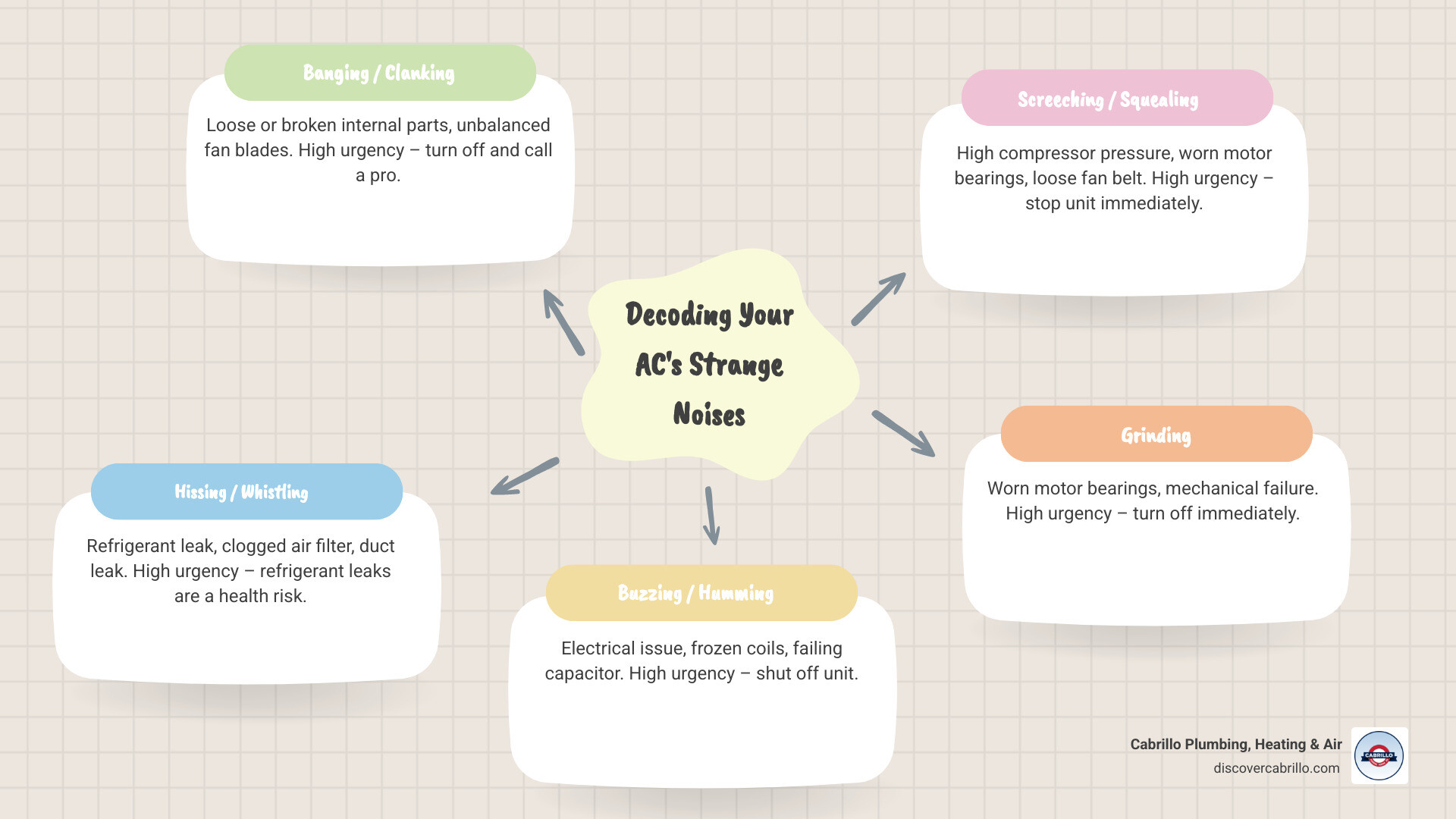
If you’re wondering what ac making strange noises what they mean, here’s a quick answer:
| Noise | Most Likely Cause | Urgency |
|---|---|---|
| Banging / Clanking | Loose or broken internal parts, unbalanced fan blades | High — turn off and call a pro |
| Hissing / Whistling | Refrigerant leak, clogged air filter, duct leak | High — refrigerant leaks are a health risk |
| Buzzing / Humming | Electrical issue, frozen coils, failing capacitor | High — shut off unit |
| Screeching / Squealing | High compressor pressure, worn motor bearings, loose fan belt | High — stop unit immediately |
| Rattling | Loose screws, panels, or debris | Medium — inspect soon |
| Clicking | Normal at startup/shutdown; persistent clicking = failing relay or thermostat | Medium to High |
| Gurgling / Bubbling | Clogged condensate drain line or refrigerant issue | Medium — schedule inspection |
| Grinding | Worn motor bearings, mechanical failure | High — turn off immediately |
Your AC should be a background hum you barely notice. Modern systems typically run between 25 and 55 decibels — roughly the volume of a quiet conversation. Some newer high-efficiency indoor units run as quietly as 19 decibels, which is softer than a library. So when your system starts banging, screeching, or buzzing, it’s telling you something is wrong.
Bay Area homeowners in San Francisco and the surrounding communities know how much they rely on a functioning AC — especially as summers grow warmer. Ignoring strange AC sounds can turn a small repair into a full system breakdown. The good news is that most noises have a clear cause, and catching them early almost always saves you time, stress, and hassle.
This guide walks you through every major AC noise, what it signals, and what to do next.
Identifying AC Making Strange Noises: What They Mean for Your System
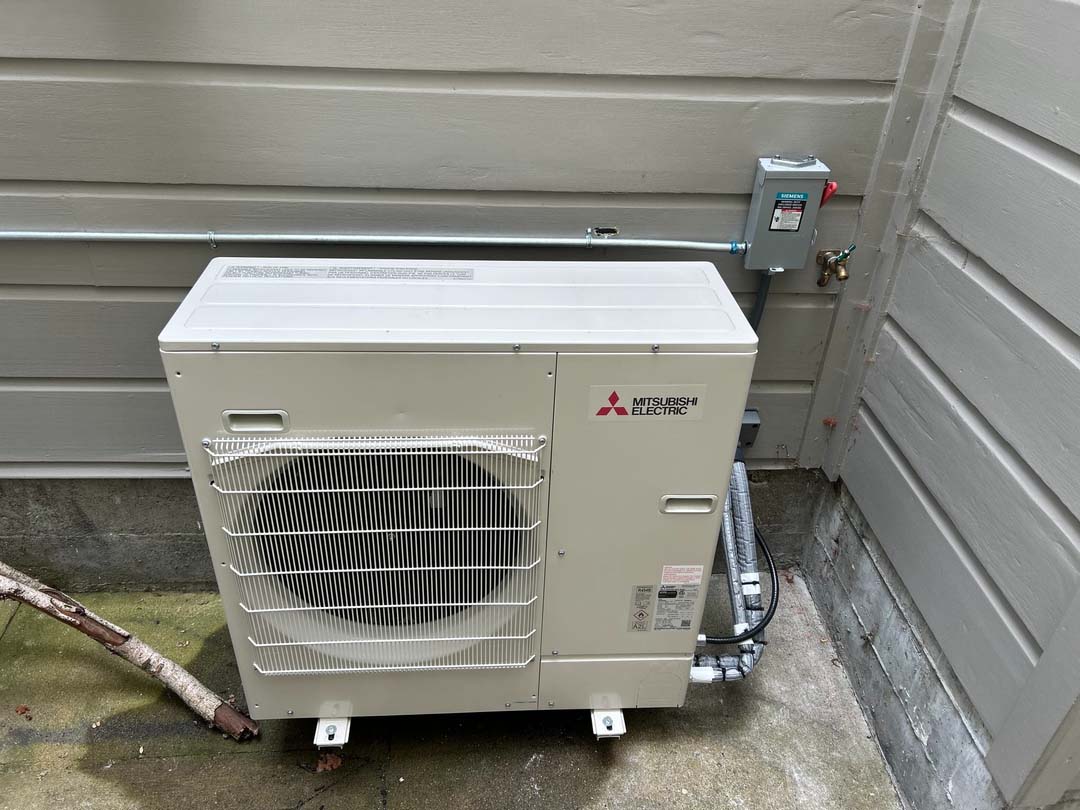
When we talk about an ac making strange noises what they mean, the first step is playing detective. Is the sound coming from your indoor air handler or the outdoor condenser unit? Indoor units are generally designed to be much quieter, so any sudden change in volume there is a major red flag. Outdoor units house the heavy-duty compressor and are naturally louder, but they should never sound like a bag of rocks in a dryer.
Differentiating between normal and abnormal sounds is key. A light “click” when the system starts or a gentle “whoosh” of air is perfectly fine. However, if you hear something that makes you jump or keeps you up at night, it’s an abnormal sound. We categorize these by urgency. “Red flag” noises like screeching, banging, or hissing require an immediate shutdown to prevent catastrophic failure or even electrical fires.
Understanding Air Conditioner Noises: What Is Your System Trying to Say to You? helps you decide whether you can wait until Monday morning or if you need an emergency repair. In our experience serving the San Francisco Bay Area since 1961, we’ve seen that addressing a “medium urgency” rattle today prevents a “high urgency” breakdown tomorrow.
Banging, Clanking, and Rattling: Mechanical Red Flags
If your unit sounds like it’s falling apart, it might be. Banging and clanking usually point to a physical obstruction or a mechanical component that has come loose. In the outdoor unit, this could be a fan blade that has become unbalanced or bent, causing it to strike the protective cage or other internal parts. It could also be a loose motor mount that is allowing the entire assembly to vibrate violently.
Rattling is often less severe but shouldn’t be ignored. It’s frequently caused by loose panels, failing screws, or even small sticks and pebbles that have fallen into the outdoor condenser. If you’re comfortable doing so, you can check for loose exterior screws and tighten them, but for anything internal, it’s best to call for Air Conditioning Repair Services. For those who want to do a quick check first, we have several Central Air Conditioner Troubleshooting Tips for San Francisco Area Homeowners that can help you narrow down the source.
Why Banging AC Making Strange Noises What They Mean for Your Compressor
The most serious cause of a loud banging noise is the compressor. The compressor is the “heart” of your AC, and it contains several moving parts like connecting rods, pistons, and crankshafts. If one of these internal components breaks or comes loose, it will create a rhythmic, heavy banging sound.
Because compressors are sealed units, these internal parts cannot usually be repaired individually. A banging compressor often signals that the unit is reaching the end of its life. Understanding How Do Your Home’s Central Air Conditioner Parts Work Together? can help you realize just how vital this component is. If your system is older and starts making this sound, it might be one of the 6 Signs It’s Time for an Air Conditioner Replacement.
Hissing, Whistling, and Bubbling: Airflow and Refrigerant Issues
When you hear hissing or whistling, your AC is likely struggling with pressure. A hissing sound is the classic hallmark of a refrigerant leak. Because refrigerant is kept under high pressure, it makes a distinct “hiss” as it escapes through small cracks in the copper lines or the expansion valve. This is a high-priority issue because refrigerant leaks can cause health problems like headaches or respiratory distress, and they are terrible for the environment.
Whistling, on the other hand, is usually an airflow issue. It could mean air is escaping through a gap in your ductwork. If you suspect this, Is Your Ductwork Leaking? Air Duct Sealing Is the Perfect Cure to restore your system’s efficiency. Bubbling or gurgling sounds are often related to the condensate drain line. If this line gets clogged, water can back up, or air bubbles can get trapped, leading to those strange “glug-glug” noises. You can learn more about this by asking What Is Your Air Conditioner Condensate Drain? and how it keeps your home dry.
If the hissing is coming from the compressor itself, it could be an early warning of internal high pressure. This is often followed by a high-pitched screech. If you hear this, turn the system off immediately and find out How Does an Air Conditioner Refrigerant Leak Develop and How Can It Be Fixed? by calling a professional.
Whistling AC Making Strange Noises What They Mean for Your Air Filter
Sometimes, a whistling sound is just your AC screaming for air. When your air filter is completely clogged with dust, pet hair, and Bay Area allergens, the blower fan has to work twice as hard to pull air through the restricted material. This creates a high-velocity whistling sound as air is forced through tiny remaining gaps.
This isn’t just a noise issue; it can lead to your evaporator coils freezing over because there isn’t enough warm air passing over them to keep the moisture from turning to ice. We always emphasize Why Change Your Air Filter in Your Furnace and Air Conditioner? because it is the simplest way to prevent major repairs. If you notice a whistle along with reduced airflow, you are likely seeing one of the 4 Common Symptoms of a Clogged Air Filter.
Buzzing, Clicking, and Screeching: Electrical and Motor Warnings
Buzzing is almost always an electrical cry for help. It could be electrical arcing (where electricity “jumps” between wires), a failing capacitor, or a malfunctioning contactor relay. In some cases, a buzzing sound from the indoor unit means you have Frozen Evaporator Coils. This happens when the system is struggling to breathe or has a leak, causing ice to build up and vibrate against the housing.
Screeching or squealing is perhaps the most “alarming” sound. In older units, this often points to a slipped or frayed fan belt. In newer systems, it usually indicates that the motor bearings in the blower fan or condenser fan have dried out and are grinding against each other. If the screeching is coming from your compressor, it’s a sign of dangerously high internal pressure. If your unit is making these sounds, you might also notice Why Is My Air Conditioner Running Constantly? as it tries in vain to reach the target temperature.
Frequently Asked Questions about AC Noises
Is it safe to run my AC if it is making a loud grinding noise?
No, it is not safe. A grinding noise almost always indicates that the bearings in one of your motors have failed. If you keep running the system, the motor will eventually seize up, which can lead to an electrical short or even a fire. It also puts immense strain on other components. Shut the system down immediately and call for Air Conditioning Repair Services.
Why does my air conditioner click repeatedly when it tries to start?
A single click at the start and end of a cycle is normal thermostat operation. However, repeated, rapid clicking usually means there is an electrical struggle. It could be a failing capacitor that doesn’t have enough “juice” to kick-start the motor, or a faulty relay switch. It can also indicate a dying thermostat that is sending confusing signals to the unit. This requires a professional electrical diagnosis to fix safely.
Can weather conditions in the Bay Area cause my AC to make more noise?
Absolutely. While we don’t get much snow, heavy San Francisco rain or wind can blow debris like leaves and twigs into your outdoor unit, causing rattling or buzzing. During our intense summer heatwaves, your system works much harder, which can make a normal hum sound more like a loud drone. To keep things quiet, follow these 5 Condensing Unit Maintenance Tips for Your Bay Area Home, such as keeping at least two feet of clearance around the unit.
Conclusion
When it comes to an ac making strange noises what they mean, the sound is usually a symptom of a deeper mechanical or electrical issue. While you can handle simple DIY tasks like clearing debris from the outdoor unit or replacing a dirty air filter, most of these sounds require the expert eye of a technician.
At Cabrillo Plumbing, Heating & Air, we’ve been helping our neighbors in San Francisco, Menlo Park, Redwood City, and across the Bay Area stay cool since 1961. We believe in transparency, which is why we charge by the job, not by the hour. Whether it’s a simple fix for a rattling panel or a complex compressor replacement, our licensed technicians arrive in fully stocked vehicles ready to restore your home’s peace and quiet.
Don’t let a small squeak turn into a major headache. Regular Air Conditioning Maintenance is the best way to catch these issues before they start making noise.
Schedule your professional AC inspection with Cabrillo today!