
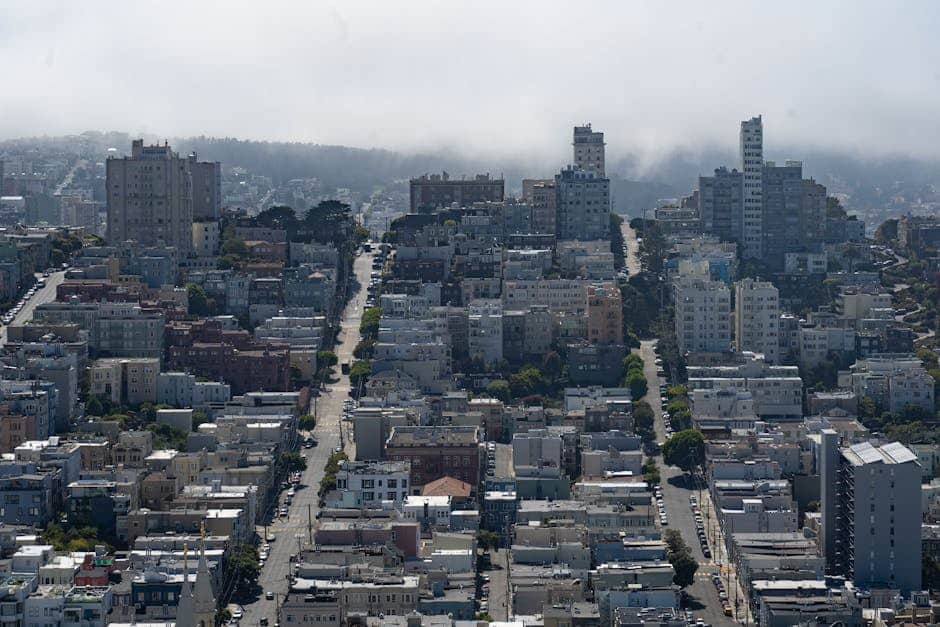
Why How Bay Area Climate Affects Your HVAC and Plumbing Matters More Than You Think
How Bay Area climate affects your HVAC and plumbing is something every local homeowner should understand — because this region’s weather is far more complex than it looks.
Here’s a quick breakdown of the key ways Bay Area climate impacts your home systems:
- Coastal fog and moisture accelerate corrosion on HVAC coils and leave pipes in unheated spaces vulnerable to freezing during cold snaps
- Microclimates mean a home in San Francisco needs a completely different HVAC setup than one in Walnut Creek — just 25 miles away
- Mild winters create a false sense of security, causing homeowners to skip maintenance on systems that then fail when actually needed
- Damp air makes cold feel colder, putting extra load on heating systems in homes that weren’t built for prolonged chill
- Inland heat waves can push older, undersized systems to their limits during summer spikes
- Older Bay Area homes — many built before modern insulation standards — lose heat through walls, attics, and leaky ductwork, driving up energy bills
- Pipe freezing is a real risk, even here, because plumbing in mild climates is rarely insulated the way colder regions require
Most Bay Area homeowners don’t think of their climate as “harsh.” But from a home systems perspective, the constant cycling between fog, heat, dampness, and cold snaps creates a unique kind of stress — one that builds quietly until something breaks.
At Cabrillo Plumbing, Heating & Air, we’ve been helping Bay Area homeowners navigate exactly these challenges since 1961. Whether your home is a foggy-coast bungalow in Daly City or a sun-baked ranch in the East Bay, the right maintenance and system choices make all the difference.
How Bay Area Climate Affects Your HVAC and Plumbing Systems
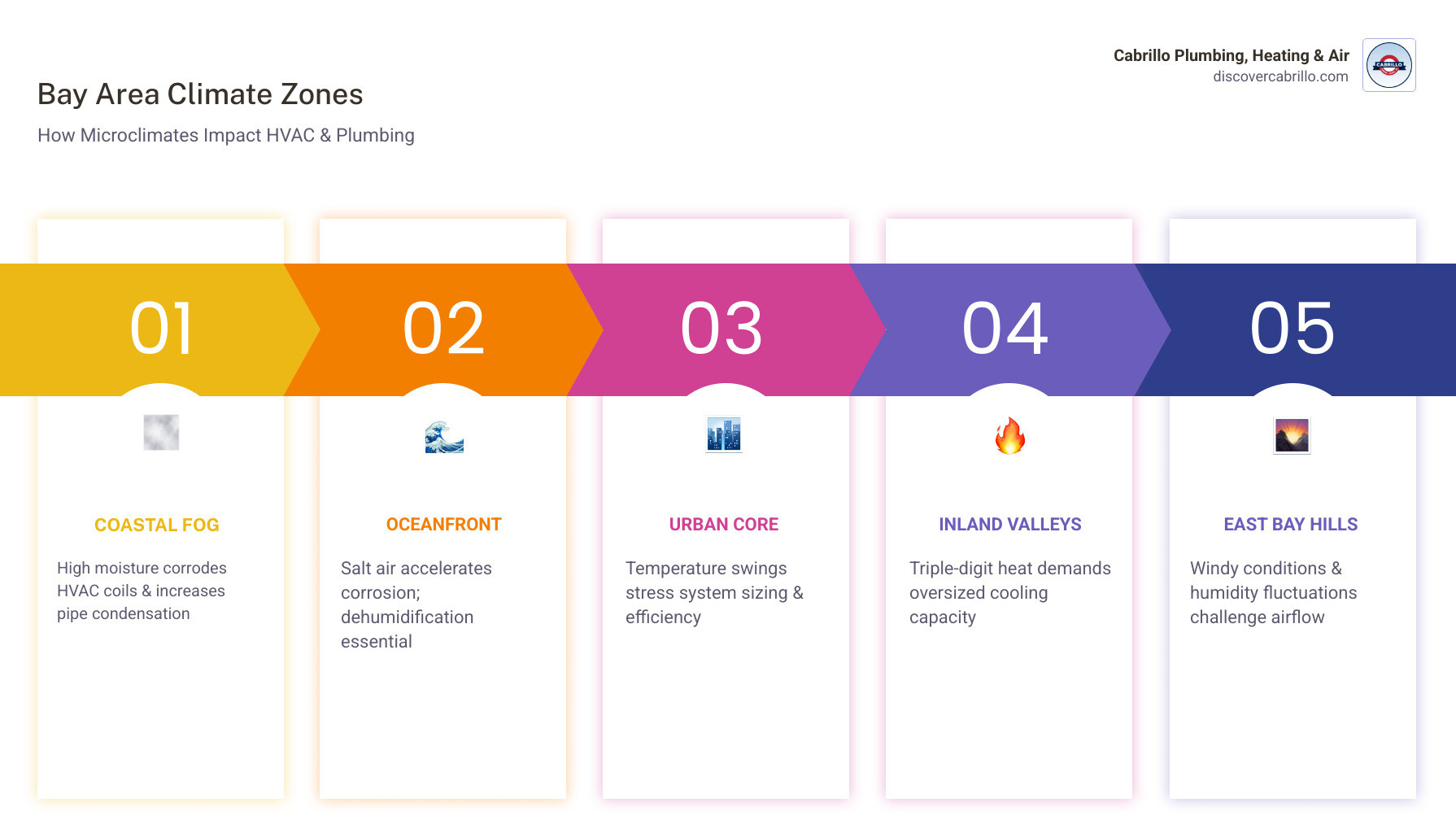
In the Bay Area, we don’t just have weather; we have microclimates. It is entirely possible to see 65°F fog in San Francisco while it’s a blistering 95°F in Walnut Creek. This diversity is why a “one-size-fits-all” approach to home services fails here.
How bay area climate affects your HVAC and plumbing is largely a story of geography. Proximity to the Pacific Ocean or the Bay determines your home’s daily battle. Coastal homes face a relentless barrage of moisture and salt air, while inland homes must contend with massive temperature swings.
Because our weather is generally mild, many systems sit idle for months. This dormancy allows dust to settle and components to stiffen, which often leads to “no-heat” or “no-cool” calls the moment the first real weather event of the season arrives. Understanding how to keep your Bay Area home cozy despite the coastal chill starts with recognizing that your home is essentially a thermal envelope that must breathe and stay dry. You also need to maintain ideal indoor humidity levels to prevent your HVAC system from working overtime to “dry out” the air before it can actually heat it.
Understanding how Bay Area climate affects your HVAC and plumbing in coastal zones
If you live in Pacifica, Daly City, or the Sunset District of San Francisco, your HVAC system has a specific enemy: salt air. The same mist that makes our coastline beautiful is chemically aggressive toward the aluminum and copper in your outdoor condenser unit. We often see units on the coast that are only five years old but look decades old because the fins are literally crumbling from corrosion.
High humidity is another constant. When the air is saturated with moisture, your AC or heat pump has to work twice as hard to dehumidify the air. If your system isn’t sized correctly for these damp conditions, it can lead to “short-cycling,” where the unit turns on and off too frequently, wearing out the compressor. Furthermore, high humidity is a threat to your house because it can lead to mold in ductwork and structural rot if not managed by a robust HVAC system.
Managing inland heat waves and temperature swings
Moving inland to places like Concord, Lafayette, or San Jose, the challenge shifts from moisture to “thermal load.” In these zones, summer temperatures frequently hit triple digits. If your HVAC system was sized based on a “rule of thumb” rather than a precise Manual J calculation, it will likely fail you when you need it most.
A Manual J calculation takes into account your home’s orientation, window placement, and insulation levels. In the inland valleys, an undersized system will run 24/7 without ever reaching your desired temperature, leading to massive PG&E bills. Conversely, an oversized system will cool the room so fast it won’t have time to remove humidity, leaving you feeling “cold and clammy.” Finding the best thermostat settings for summer is much easier when your system is actually capable of handling the local heat.
Protecting Your Plumbing from Coastal Chill and Dampness
It’s a common myth that Bay Area pipes don’t freeze. While we don’t live in the Arctic, our “mild” climate means our homes aren’t built with the heavy-duty insulation found in the Midwest. Most plumbing in our area is located in unheated crawlspaces or along exterior walls with zero protection.
Coastal dampness also plays a role in plumbing health. High humidity can cause condensation on cold water pipes, which eventually leads to slow-acting corrosion or mold growth behind your walls. Additionally, many residents deal with the effects of hard water, which, when combined with temperature fluctuations, can lead to mineral scale buildup that restricts flow and damages appliances. Understanding how hard water affects your plumbing is vital for long-term system health.
Preventing frozen pipes during rare cold snaps
When April 2026 brings an unexpected cold snap, the risk of frozen pipes skyrockets. Because our ground rarely freezes, pipes are often buried shallowly or exposed under the house.
To protect your home, we recommend:
- Insulation Sleeves: Fitting foam or fiberglass sleeves over exposed pipes in crawlspaces or garages.
- The Trickle Method: During a freeze warning, let a very thin stream of water run from the faucet furthest from the water main. Moving water is much harder to freeze.
- Outdoor Spigots: Disconnect garden hoses and use insulated covers for your outdoor faucets.
- Insulation Upgrades: Following home insulation tips can keep the ambient temperature in your “dead spaces” high enough to prevent a plumbing disaster.
Addressing moisture-driven plumbing issues
Dampness isn’t just an HVAC problem; it’s a plumbing one. In foggy regions, the soil can remain saturated for long periods, putting pressure on your home’s foundation and drainage systems. If your home has a basement or a low-lying crawlspace, a sump pump is a non-negotiable piece of equipment. Without efficient drainage, that moisture can seep into your plumbing trenches, causing soil shifts that lead to cracked sewer lines or shifted water mains.
Why Heat Pumps are the Ideal Solution for Local Microclimates
If there is one technology perfectly suited for the Bay Area, it’s the heat pump. Unlike a furnace that creates heat by burning gas, a heat pump moves heat from one place to another. In the summer, it moves heat out of your house (acting as an AC). In the winter, it pulls heat from the outdoor air and moves it inside.
Since Bay Area winters rarely drop below 30°F, heat pumps operate at their peak efficiency here — often 3 to 4 times more efficient than gas furnaces. This can lead to significant energy savings, with some households saving nearly $80 a month on utility bills. If you’re curious about the mechanics, check out our guide on how heat pumps work.
Optimizing how Bay Area climate affects your HVAC and plumbing with electrification
Switching to electric heat pumps isn’t just about your wallet; it’s about the air we breathe. Gas-heated buildings in the Bay Area create eight times more smog-forming nitrogen oxide pollution than all the region’s power plants combined. By moving toward electrification, you reduce your home’s greenhouse gas emissions by up to 64%.
Modern heat pumps use variable-speed compressors, which are a game-changer for microclimates. Instead of being “all on” or “all off,” they can run at 20% or 50% capacity to maintain a perfectly steady temperature, which is much better for managing the shifting fog and sun of a typical San Francisco afternoon. Just remember that these high-tech systems require a specific maintenance checklist to stay in top shape.
Performance during 2026 temperature fluctuations
As we look at the weather patterns for 2026, the ability of a system to handle “shoulder seasons” — those days that start at 45°F and end at 75°F — is crucial. Heat pumps excel here because they can switch modes almost instantly. They also feature defrost cycles that manage the frost buildup common in our damp, chilly mornings, ensuring that the system doesn’t freeze up while trying to keep you warm.
Overcoming Efficiency Gaps in Older Bay Area Homes
Many of our favorite homes in neighborhoods like Berkeley, Oakland, and San Francisco were built long before energy efficiency was a “thing.” These beautiful Victorians and mid-century bungalows often have zero wall insulation and original ductwork that looks like a block of Swiss cheese.
In an older home, how bay area climate affects your HVAC and plumbing is amplified. A leaky house in a windy hill neighborhood will lose its heated air almost as fast as the furnace can produce it. Sealing home air leaks is the most cost-effective way to improve comfort. You should also check the R-values of your insulation to ensure your attic is actually keeping the heat in.
Improving furnace and ductwork performance
In older homes, up to 30% of your heated or cooled air can be lost through holes in the ductwork before it ever reaches your living room. This energy loss forces your furnace to run longer, leading to premature wear and tear.
If you notice uneven heating, it might be an airflow issue. During the winter, you can improve furnace efficiency by ensuring all vents are clear and filters are fresh. If your system is struggling, you might even encounter frozen evaporator coils, which can happen if airflow is restricted during a cold snap.
Retrofitting for modern climate demands
For homes that lack the space for traditional ductwork (like those iconic SF Victorians), ductless mini-split systems are the perfect retrofit. They allow for “zoning,” meaning you can heat the bedroom without wasting energy on the downstairs parlor. Combine this with attic sealing and modern air filtration, and you can turn a 100-year-old house into a modern marvel of efficiency.
Essential Maintenance for a Mild but Variable Climate
Because our climate doesn’t have the “hard stops” of a snowy East Coast winter, many people forget that HVAC and plumbing need seasonal attention. Maintenance isn’t just about preventing a breakdown; it’s about keeping your energy bills from creeping up as the system gets dirty.
| Task | Spring/Summer | Fall/Winter |
|---|---|---|
| Air Filters | Replace every 1-3 months | Replace every 1-3 months |
| Outdoor Unit | Clear weeds/debris (2ft gap) | Check for salt corrosion/rust |
| Thermostat | Set for cooling efficiency | Set for winter comfort |
| Ductwork | Inspect for leaks | Check for airborne particles |
| Plumbing | Check irrigation for leaks | Insulate exposed pipes |
Preparing for seasonal transitions
The “shoulder seasons” in the Bay Area are notoriously hard on HVAC systems. When you switch from heating in the morning to cooling in the afternoon, you risk “short-cycling” the compressor. We recommend giving your system a 5-minute “rest” between mode changes. This is also the best time for a professional tune-up. Our technicians can spot the subtle signs of wear — like a fraying belt or a leaking capacitor — before they turn into an emergency on the hottest or coldest day of the year.
Frequently Asked Questions about Bay Area Home Systems
Why does my home feel cold even when the heater is on?
This is usually due to “heat loss.” In the Bay Area, coastal moisture pulls heat away from your body faster than dry air does. If your home has insulation gaps or leaky ducts, your heater might be producing enough warmth, but it’s escaping into the attic or outside before it can actually warm the surfaces of your home.
Do I really need to worry about frozen pipes in the Bay Area?
Yes! Because our plumbing is often uninsulated and located in crawlspaces, even a brief dip to 30°F can cause a pipe to burst. Since these pipes aren’t protected by the “thermal mass” of the house, they are highly vulnerable to rare cold snaps.
How often should I service my HVAC system in a mild climate?
We recommend professional service at least once a year. In a mild climate, systems often sit unused, which allows dust to build up on coils and in burners. Routine maintenance prevents these minor issues from causing a total system failure when the weather finally shifts.
Conclusion
Understanding how bay area climate affects your HVAC and plumbing is the first step toward a more comfortable, efficient home. From the salt air of the coast to the heat of the inland valleys, our unique environment demands specialized care.
At Cabrillo Plumbing, Heating & Air, we specialize in microclimate-ready solutions. Whether you need a heat pump upgrade to lower your PG&E bills or a plumbing inspection to protect against the next cold snap, we’re here to help. Our “by the job” pricing and top-tier warranties ensure you get the best service in the Bay Area, from San Francisco down to San Jose.
Don’t wait for the fog to turn into a freeze or the sun to turn into a heatwave. Schedule your climate-ready home assessment today and ensure your home is ready for whatever the Bay Area throws at it.