
Small HVAC Mistakes That Cost Bay Area Homeowners Big Every Year
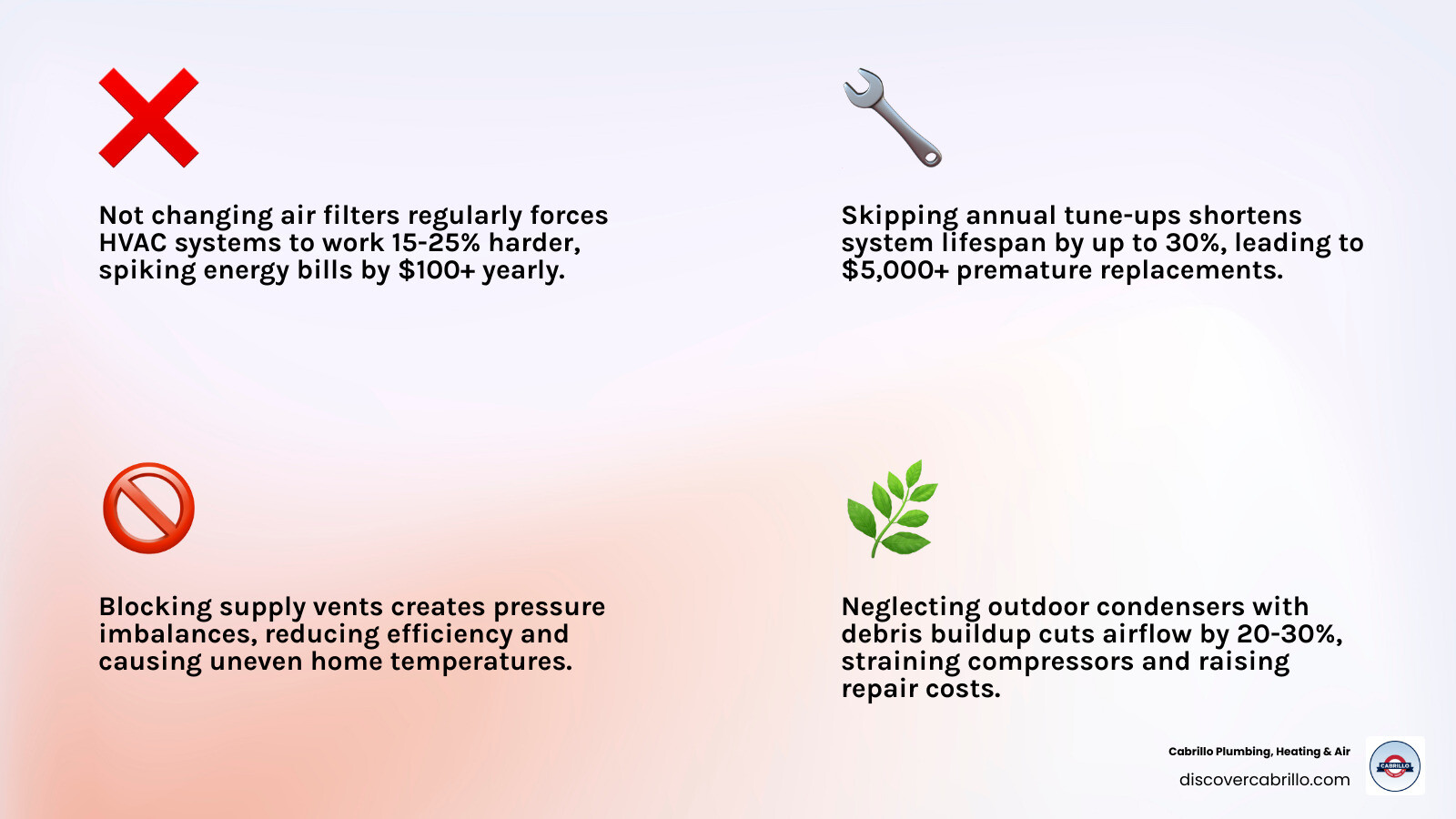
The hvac maintenance mistakes homeowners make are rarely dramatic — they’re the small, easy-to-overlook habits that quietly chip away at your system’s efficiency, comfort, and lifespan. Things like a forgotten filter swap, a blocked vent, or skipping a seasonal tune-up. On their own, each one seems minor. Together, they can shorten your system’s life by up to 30% and drive up your energy bills by hundreds of dollars a year.
Here are the most common HVAC maintenance mistakes homeowners make:
- Not changing air filters regularly (every 1–3 months, or more often with pets/allergies)
- Skipping annual professional tune-ups before cooling or heating season
- Blocking or closing supply vents in unused rooms
- Neglecting the outdoor condenser unit — letting debris and vegetation build up around it
- Installing an improperly sized HVAC system — too big or too small causes real problems
- Ignoring warning signs like strange noises, musty odors, or moisture near the unit
- Misusing the thermostat — wrong placement or setting it too low
- Attempting DIY repairs without the proper training or tools
For Bay Area homeowners, these mistakes hit differently. Wildfire season strains air filters faster than average. Mild winters make it tempting to skip heating maintenance — until something breaks on a cold January night. And older Bay Area homes often have ductwork and systems that need extra attention to stay efficient.
The good news? Every single one of these mistakes is preventable. This guide breaks them down one by one so you know exactly what to watch for — and what to do instead.
Common HVAC Maintenance Mistakes Homeowners Make with Air Filters
We often tell our neighbors in San Francisco and San Mateo that the air filter is the “unsung hero” of the home. It’s a simple component, but when it’s neglected, the entire system suffers. One of the most frequent hvac maintenance mistakes homeowners make is treating the air filter as an “out of sight, out of mind” item.
When a filter becomes clogged with dust, pet dander, and Bay Area allergens, it creates airflow restriction. Think of it like trying to breathe through a thick sweater; your lungs (the HVAC blower motor) have to work significantly harder to get the same amount of air. This extra strain can increase your energy use by 5–15%. Over time, that restricted airflow can even cause your evaporator coils to freeze up, leading to a total system shutdown right when you need cooling the most.
To keep your system running smoothly, you need to know how often should you change your air filter. While the standard advice is every 90 days, homes in Oakland or San Jose with pets or residents who suffer from asthma may need a swap every 30 to 60 days.
Choosing the Wrong Filter Type
Not all filters are created equal. Some homeowners pick up the cheapest “throwaway” fiberglass filters at the hardware store, thinking they’re saving money. However, these basic filters often have low MERV ratings, meaning they only catch the largest particles and let fine dust settle on your sensitive HVAC components.
On the flip side, some homeowners buy the highest-rated medical-grade filter available, which can be so thick that it actually damages the blower motor by suffocating the system. We generally recommend pleated filters for a balance of filtration and airflow. There are at least 5 reasons pleated air filters out perform standard throwaway filters, including better surface area and superior particle capture. Before you buy, it’s vital to understand what is the MERV rating of an air filter and which level is appropriate for your specific equipment.
Forgetting Regular Replacements
Life in the Bay Area is busy. Between commuting to Palo Alto and enjoying the weekends in Half Moon Bay, it’s easy to forget a filter change. But is a dirty air filter hindering the performance of your furnace? Absolutely. In fact, it’s the number one cause of system “short cycling,” where the unit turns on and off rapidly because it’s overheating.
If you aren’t sure which one you need, take a moment to learn about what are the different types of air filters for your house. Keeping a small stash of filters in the garage or a closet makes it much easier to stick to a schedule.
The Consequences of Skipping Professional Tune-ups
Many homeowners view HVAC maintenance as an optional “luxury” service. In reality, it is a fundamental requirement for system longevity. Skipping professional tune-ups is one of the costliest hvac maintenance mistakes homeowners make because it trades a small, predictable maintenance cost for a large, unpredictable emergency repair bill.
| Service Type | Estimated Cost Impact | Long-term Effect |
|---|---|---|
| Preventive Maintenance | Low, predictable | Extends lifespan by up to 30% |
| Emergency Repairs | 30–50% higher than standard | Often occurs during peak heat/cold |
| Neglected System | High energy bills | Premature replacement (8-10 years) |
| Maintained System | Lower energy bills | Optimized lifespan (15+ years) |
Routine service ensures that your electrical connections are tight, your refrigerant levels are correct, and your moving parts are lubricated. There are top 4 benefits of HVAC preventive maintenance that every homeowner should consider: lower utility bills, fewer repairs, increased safety, and better indoor air quality.
Missing Seasonal Inspections
In the Bay Area, we have a unique climate. While we don’t deal with snow, our systems still face heavy workloads. With the arrival of spring comes the season for air conditioner tune ups. If your AC sits idle all winter, dust and debris can settle in the drain lines and on the coils. Starting it up for the first time on a 90-degree day in Walnut Creek without an inspection is asking for trouble.
Don’t wait for the first heatwave to realize your system is struggling. It’s time to schedule your annual air conditioner maintenance appointment with Cabrillo before the rush begins.
Neglecting Long-term System Health
Think of your HVAC system like your car. You wouldn’t dream of driving 50,000 miles without an oil change, yet many homeowners go years without an HVAC check-up. We’ve seen how maintenance can extend the life of your equipment.
A well-maintained unit can last 15 years or more, while a neglected one might fail in as little as 8 to 10 years. In the grand scheme of homeownership, regular heating and cooling maintenance is an evolutionary requirement for anyone looking to protect their investment and maintain home comfort.
Airflow Obstructions and Outdoor Unit Neglect
Airflow is the lifeblood of your HVAC system. Anything that blocks the movement of air makes the system work harder and consume more power. This applies to both the vents inside your home and the large unit sitting outside in your yard.
Blocking Interior Supply Vents
It’s a common myth that closing vents in unused rooms saves money. Some people think, “I’m not using the guest room in my Daly City home, so I’ll close the vent to send more air to my bedroom.” In reality, your HVAC blower is designed to push air against a specific amount of pressure. When you close vents, the pressure builds up in the ducts, which can lead to leaks, frozen coils, and a stressed-out blower motor.
Similarly, keep an eye on your furniture placement. A heavy sofa or a decorative rug placed over a return vent can starve the system of air. For the best performance, ensure all vents are open and unobstructed. If you’re in the East Bay, an AC maintenance tune up in Oakland, CA can help identify if your ductwork is suffering from these pressure imbalances.
Overlooking the Outdoor Condenser
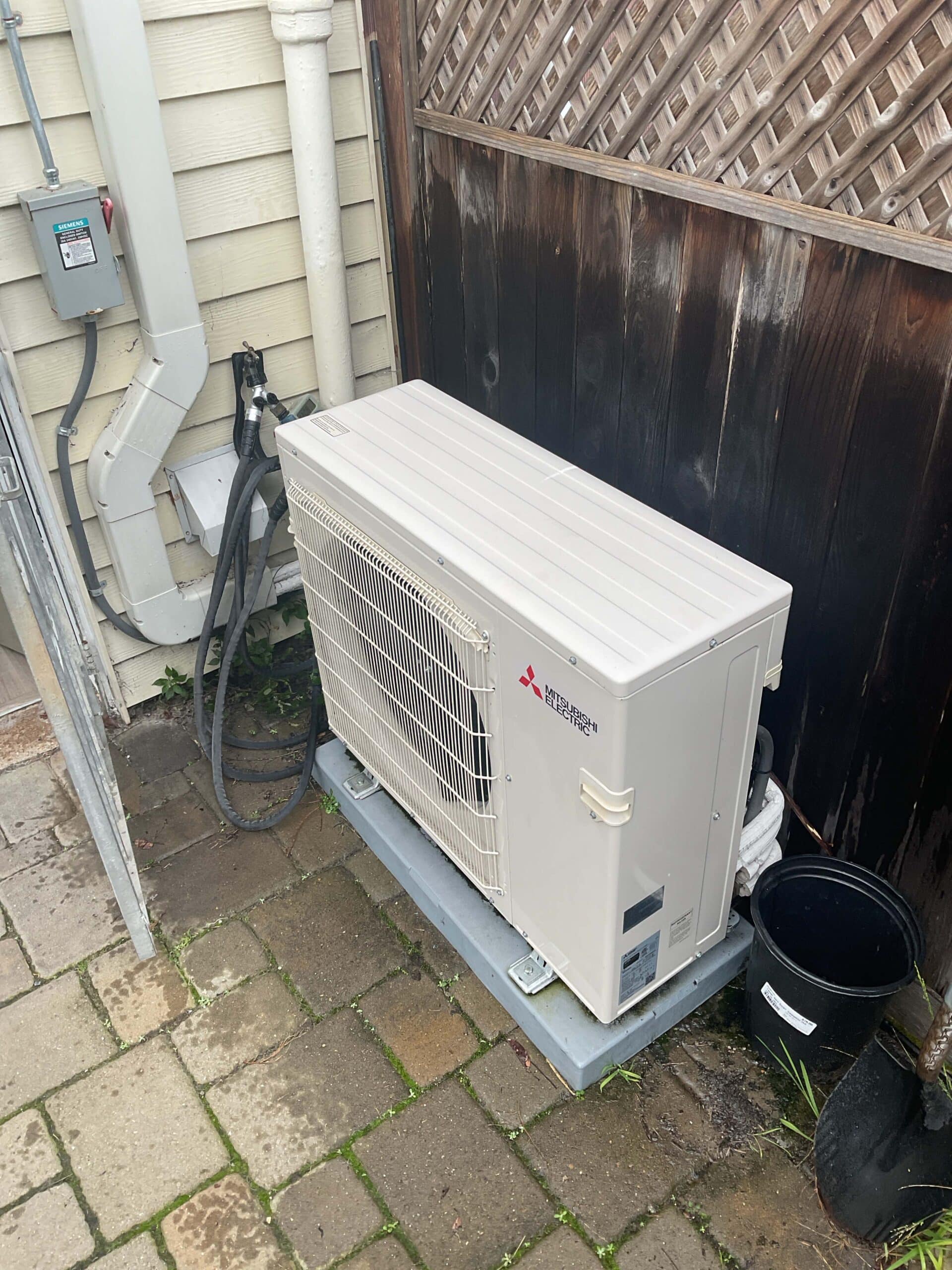
The outdoor unit (the condenser) is responsible for releasing the heat collected from inside your home. If it’s buried under dried leaves, overgrown bushes, or “hidden” behind a tight decorative fence, it can’t breathe. Obstructions near the outdoor unit can cause energy consumption to increase by up to 20%.
We recommend keeping a two-foot “clear zone” around the unit on all sides. Trim back the ivy and clear out the cobwebs. If you live in the South Bay, scheduling an AC maintenance tune up in San Jose, CA is a great way to ensure your outdoor coils are chemically cleaned and ready to shed heat efficiently. For those in the city, an AC maintenance tune up in San Francisco, CA is equally important, especially given the salt air and fog that can lead to coil corrosion.
Technical Errors: Sizing, Thermostats, and DIY Risks
Some of the most significant hvac maintenance mistakes homeowners make happen before the system is even turned on, or during attempts to “fix” things without professional help.
How Improper Sizing Leads to HVAC Maintenance Mistakes Homeowners Make
When it comes to HVAC, bigger is definitely not better. An oversized unit will “short cycle,” meaning it turns on, blasts the house with cold air, and turns off before it has a chance to properly dehumidify the air. This leaves your home feeling clammy and puts immense wear on the compressor. Conversely, an undersized unit will run constantly, struggling to reach the set temperature and driving your energy bills through the roof.
Whether you have a traditional central air system or you’re looking into ductless mini split maintenance in San Francisco, CA, ensuring the system is correctly sized for your home’s square footage and insulation levels is critical.
Avoiding HVAC Maintenance Mistakes Homeowners Make with Thermostats
The thermostat is the brain of your system, but it can be easily fooled. If your thermostat is placed in direct sunlight, near a drafty window, or right next to a heat-producing lamp, it will give false readings. This causes the system to run when it shouldn’t, or stay off when you’re uncomfortable.
If you use a heat pump, maintenance is even more specialized. Proper heat pump maintenance in San Francisco, CA includes checking that the thermostat is communicating correctly with the reversing valve and backup heat strips.
The Dangers of DIY Repairs
We love a good DIY project as much as anyone, but the HVAC system is not the place for experimentation. These units involve high-voltage electricity, pressurized refrigerants, and sensitive electronic boards. One wrong move can void your manufacturer’s warranty or, worse, cause a fire or refrigerant leak.
Whether you need ductless mini split maintenance in San Jose, CA or a simple capacitor replacement, it’s always safer and more cost-effective in the long run to call in the experts. Professional technicians have the tools to diagnose the root cause of an issue, rather than just treating the symptoms.
Ignoring Critical System Warning Signs
Your HVAC system will often try to tell you it’s in trouble long before it actually breaks down. Ignoring these warning signs is a major mistake. If you notice 4 common symptoms of a clogged air filter—like whistling sounds or dusty vents—take action immediately.
Moisture and Leakage Issues
Finding water near your indoor unit is never a good sign. It usually points to a clogged condensate drain line. In the humid microclimates of the Bay Area, algae and mold can grow inside these lines, causing water to back up and overflow. This can lead to serious water damage to your floors or ceiling.
For those with modern systems, following the ultimate SF heat pump maintenance and tune up checklist includes flushing these drain lines to prevent mold growth and musty odors.
Performance Fluctuations
Is your bedroom in Palo Alto freezing while your living room is sweltering? Uneven cooling and weak airflow are signs that your system is struggling. It could be a duct leak, a failing blower motor, or a refrigerant imbalance. If you’re experiencing these issues, specialized heat pump maintenance in San Jose, CA can help recalibrate the system for consistent comfort across every room.
Frequently Asked Questions about HVAC Maintenance
How often should I change my air filter in the Bay Area?
In the San Francisco Bay Area, we recommend checking your filter every 30 days. While some homes can go 90 days, factors like wildfire smoke, pet dander, and high pollen counts often require a change every 1 to 2 months to maintain air quality and system efficiency.
What are the signs that my HVAC system is improperly sized?
The biggest sign is “short cycling” (the unit turns on and off every few minutes). Other signs include high humidity levels inside the home, significant temperature swings between rooms, and unusually high energy bills compared to your neighbors.
Why is professional maintenance better than DIY?
Professional maintenance involves technical tasks that homeowners cannot safely do, such as measuring refrigerant pressure, testing electrical draw on motors, and inspecting heat exchangers for cracks. A professional tune-up also preserves your manufacturer’s warranty, which often requires proof of annual service.
Conclusion
Avoiding the most common hvac maintenance mistakes homeowners make doesn’t have to be a full-time job. By staying on top of filter changes, keeping your vents clear, and listening for unusual noises, you’re already ahead of the curve. However, the single best way to protect your home’s comfort is to partner with a professional team that knows the specific needs of Bay Area homes.
At Cabrillo Plumbing, Heating & Air, we’ve been serving our community since 1961. We understand that your time is valuable, which is why we charge by the job, not by the hour, and offer top-tier warranties for your peace of mind. One of the easiest ways to stay on track is by enrolling in HVAC maintenance agreements. Our maintenance program ensures you never miss a seasonal tune-up, giving you priority service and discounts on repairs.
Whether you’re in Menlo Park, San Mateo, or Oakland, don’t let small mistakes turn into big headaches. Contact us today for expert air conditioning service and let us help you keep your home comfortable all year long!